TO BUILD MEDICAL SYSTEMS FOR THE INTERVAL WHEN THE PATIENT IS STILL ALIVE, THE SURGEON IS DISTANT, AND TIME ITSELF HAS BECOME PART OF THE INJURY.
Longwatch Cell exists to explore systems that can help stabilise, sense, contain, transmit and support clinical decision-making when evacuation is delayed and specialist surgical presence is absent.
A casualty is not simply an injured body moving along a clinical pathway. The wounded human exists inside an ecology — terrain, weather, drone threat, evacuation delay, blood availability, communications, medic capability, cognitive load.

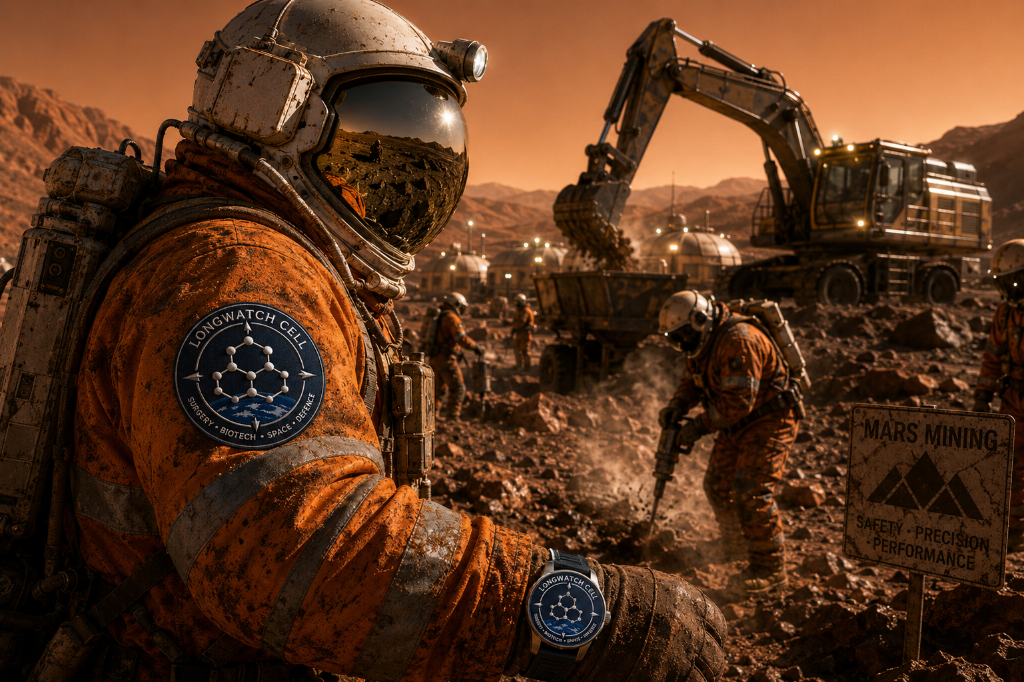
THE FINAL FRONTIER OF TIME-CRITICAL CARE
When the surgeon is not merely distant but off-world, the interval between injury and intervention stretches beyond anything terrestrial medicine has faced. Longwatch Cell is engineered for that horizon — where evacuation is measured in days, and stabilisation must be autonomous.
The same systems that hold a casualty alive on a remote battlefield scale to lunar regolith, orbital stations, and Mars transit. One architecture. Every ecology.
THE GAP BETWEEN
INJURY AND CARE
The problem is not simply the wound. It is the environment. The body is vulnerable, expertise may be distant, time is unforgiving, and the environment itself becomes part of the injury.
Modern battle injury patterns — particularly drone-delivered craniofacial trauma — demand a new generation of stabilisation, sensing, and transmission capability that does not yet exist at the point of injury.
POINT OF INJURY.
The specialist is 250 kilometres away.
Evacuation window: UNKNOWN.
Drone threat overhead.
Communication: DEGRADED.
The wound is open.
Time is now part of the injury.
THE GAP IS THE PROBLEM.
AREAS OF
DEVELOPMENT
IP-protected concepts and prototype-phase technologies under development in collaboration with CSIRO and the University of Wollongong iAccelerate division.
Craniofacial Trauma Stabilisation
Novel platforms for stabilising severe maxillofacial and craniofacial injuries in the constrained evacuation environment, where definitive reconstruction is delayed.
Mandibular Regeneration & Reconstruction
Advanced scaffolding and regeneration concepts designed for deployment in austere conditions, bridging the interval between trauma and reconstructive surgery.
Cranial & Facial Protective Systems
Protective stabilisation devices engineered to contain, immobilise and monitor craniofacial injury during extended evacuation phases.
Abdominal Wound Containment
IP-protected containment and stabilisation platforms for severe abdominal injuries, addressing haemorrhage, contamination control and organ protection.
Autonomous Wound Management
Remotely supported and autonomous wound-management concepts that function when trained medical personnel are unavailable or cognitively overloaded.
Sensor-Enabled Trauma Platforms
Integrated sensing and telemetry systems that monitor patient physiology, device function and environmental conditions, transmitting critical data to remote surgical support.
New Advisers:
Ken Ferris & Neave McHugh
Pleased to welcome Ken Ferris, MAPS, Clinical Psychologist and Educational & Developmental Psychologist, as an adviser to Longwatch Cell. Ken will advise across the human-factors interface within Delayed-Access Surgical Systems™ (DASS™) and Adaptive Multidomain Decision Theory™ (AMDT™) — including AI–human trust and scepticism, cognitive load, first-responder decision-making, screen-mediated support, training, behavioural response, and human–AI interaction under pressure.
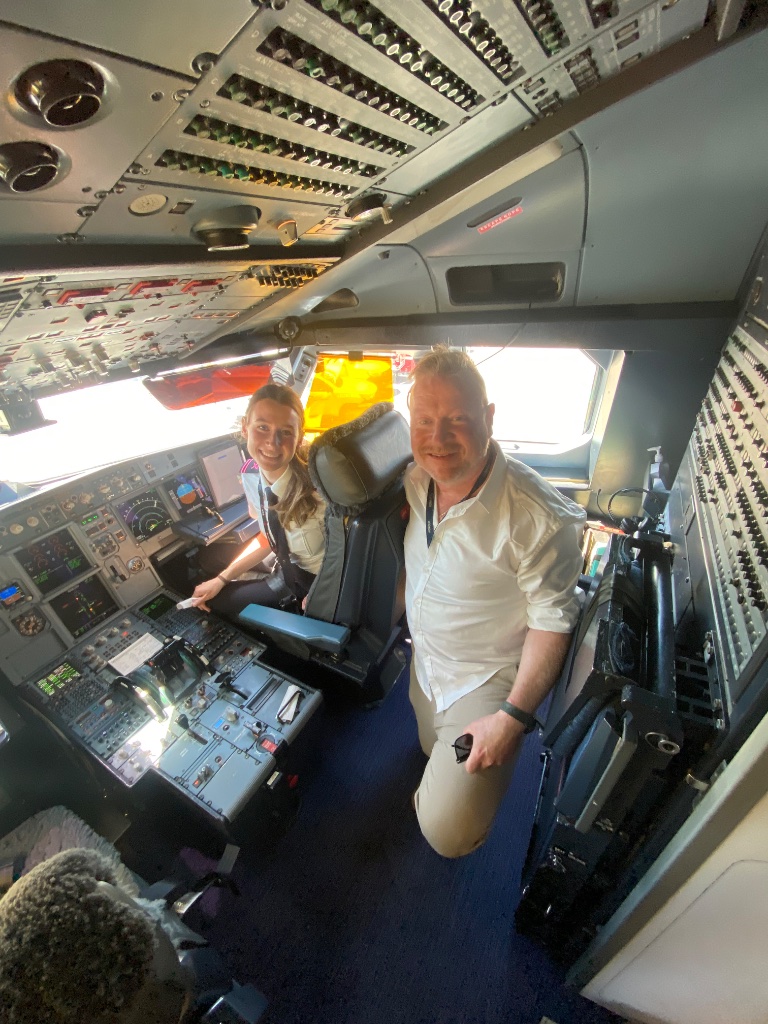
This is in addition to Neave McHugh, Airbus A320 pilot, who contributes aviation systems thinking to Longwatch Cell™. Her perspective supports human factors, situational awareness, workload management, hand–eye coordination, visual systems integration and human-automation interaction and decision-making under pressure — translating aviation safety and cockpit-performance principles into the development of DASS™, AMDT™ and Overwatch™.
Another step in building the multidisciplinary architecture around DASS™, AMDT™ and Overwatch™ — bringing psychology, medicine, engineering and artificial intelligence together around the problem of how humans make safe decisions when time, expertise and access are constrained.
Novel Concepts with CSIRO
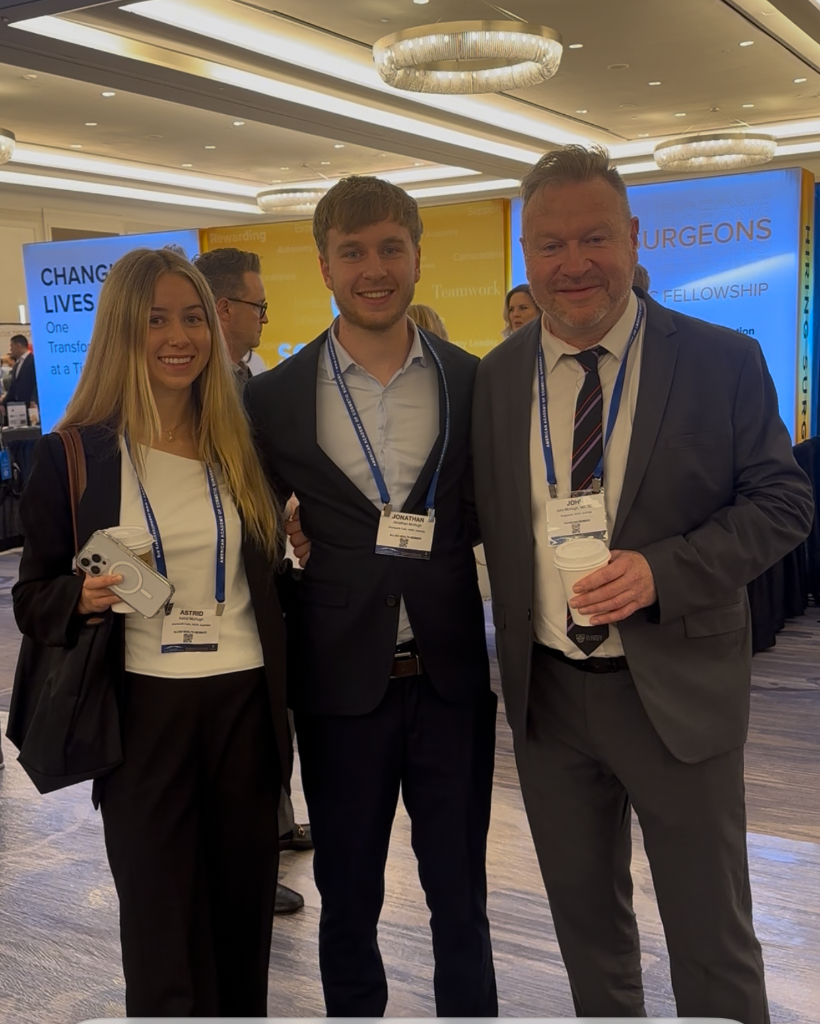
This week has been busy in meetings for Astrid and Jonathan McHugh (Medical and Health Sciences, University of Wollongong) and myself, with CSIRO (Commonwealth Scientific and Industrial Research Organisation) — exploring novel concepts on biomaterials and tissue-engineering for mandibular / bone reconstruction in constrained, humanitarian, remote and space environments.
As drone warfare, evacuation delay and austere operational environments increasingly alter patterns of survivability and introduce logistical limitations, it is important that reconstructive surgeons begin thinking differently about tissue engineering, reconstruction and surgical support under constraint.
Astrid and Jonathan will be joining ASAM, the University of Tasmania, the Australian Space Agency and the Centre for Antarctic, Remote and Maritime Medicine as registrants for the Humans in Space 2026 intake to further develop our thinking.
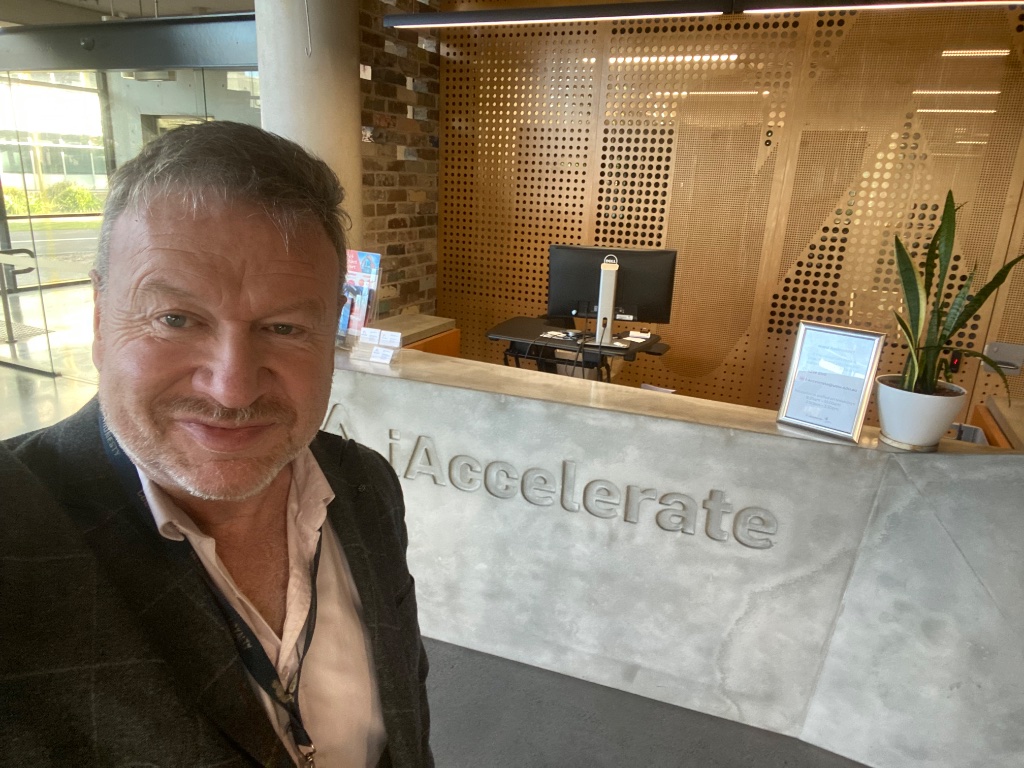
iAccelerate
Program
Longwatch Cell operates from within iAccelerate — the University of Wollongong's innovation and accelerator program — providing access to research infrastructure, academic collaboration and translational pathways.
This partnership supports the development of novel biomaterials, tissue-engineering platforms and austere surgical systems in close proximity to CSIRO and the broader university research ecosystem.
Space Medicine
Course
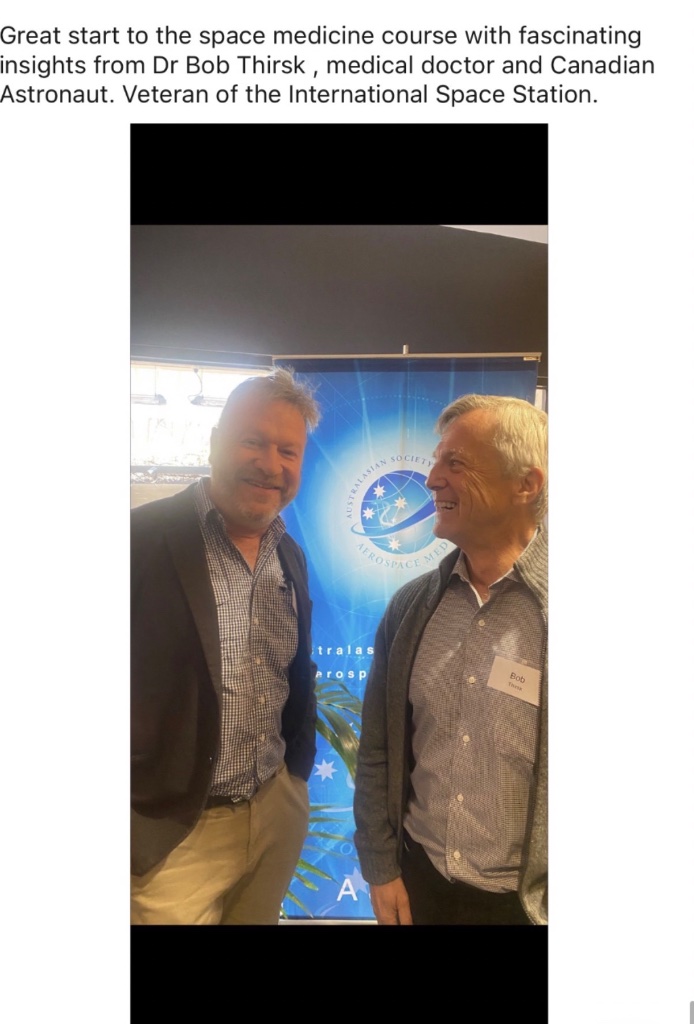
Great start to the space medicine course with fascinating insights from Dr Bob Thirsk, medical doctor and Canadian Astronaut. Veteran of the International Space Station.
Surgical Skills
Transfer Workshop
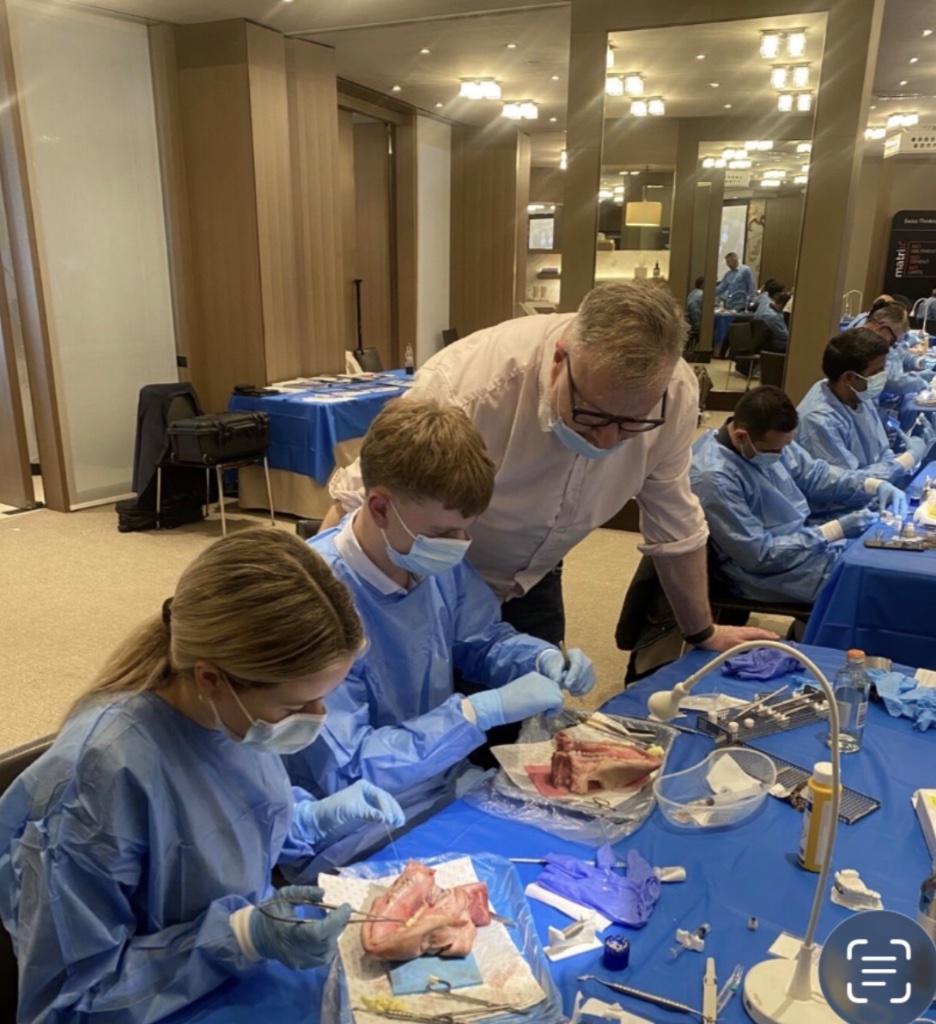
Thanks again to Geistlich and Dr Troeltzsch (Germany) for a very informative workshop on Oral and Maxillofacial Surgery and bone grafting techniques with 3D printed titanium mesh and navigation systems (similar to the ones used when I was working in Neurosurgery).
Photo is me with Jonathan and Astrid McHugh, where dad got to pass on a few tips, without much protestation or dissent!
‘Hollow Theory’ of
Bone Remodelling
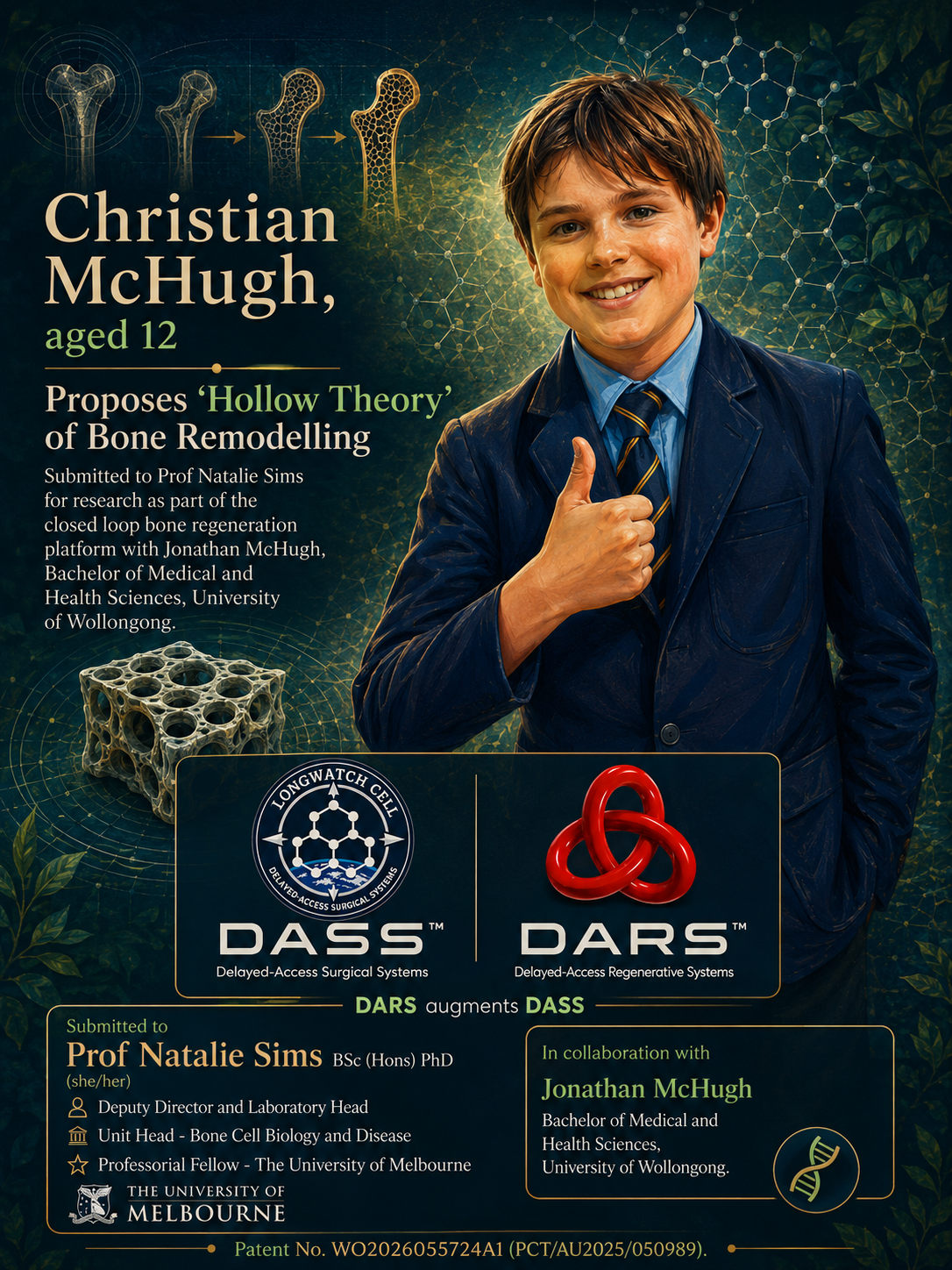
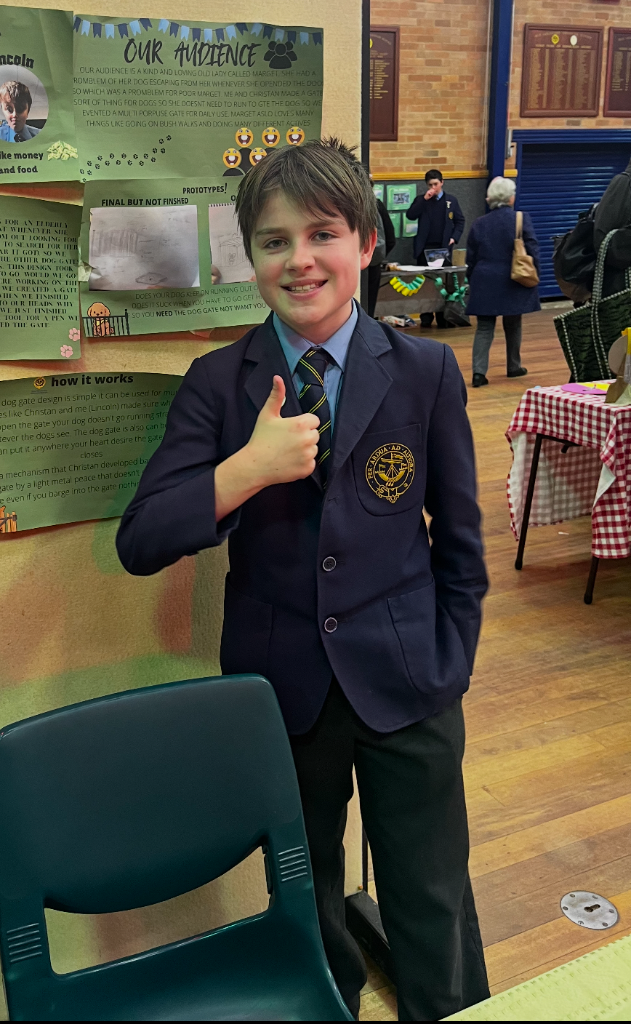
Christian McHugh, aged 12 proposes the ‘Hollow Theory’ of Bone Remodelling — submitted to Prof Natalie Sims (Deputy Director and Laboratory Head, Bone Cell Biology and Disease, The University of Melbourne) as part of the closed-loop bone regeneration platform with Jonathan McHugh, Bachelor of Medical and Health Sciences, University of Wollongong.
“And if it doesn’t work? We learn why. Then we change the design, test it again, and keep going.”
Some problems are important enough to keep working on until we find a better answer.
Multinational
Field Medicine
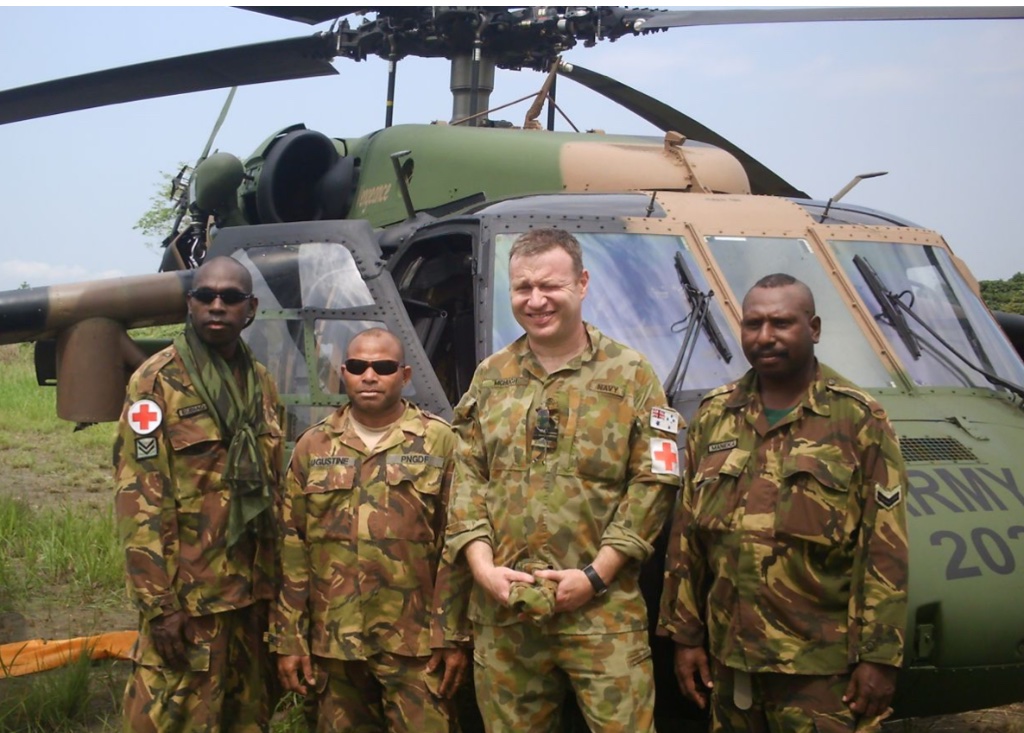
Joint medical operations with the Papua New Guinea Defence Force — working alongside multinational military medical teams in austere regional environments where surgical infrastructure is limited and cross-specialty cooperation is essential.
These deployments reinforce the Longwatch Cell principle: when evacuation pathways are uncertain and specialist care is distant, the ability to adapt, collaborate and stabilise across national and disciplinary boundaries becomes mission-critical.
Novel Technique
Presentation
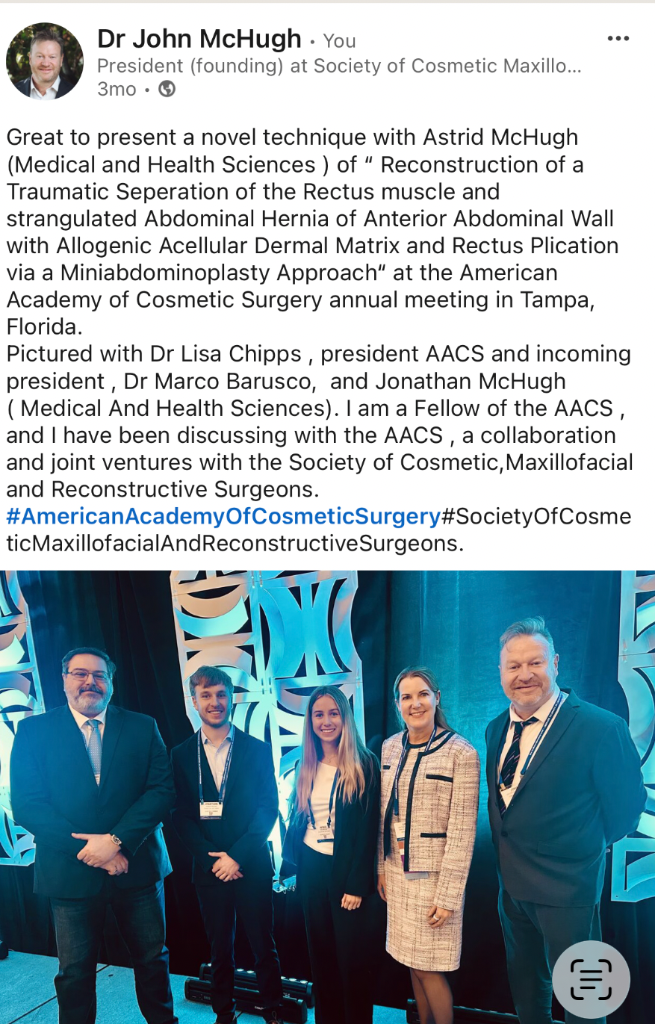
Great to present a novel technique with Astrid McHugh (Medical and Health Sciences) — "Reconstruction of a Traumatic Separation of the Rectus muscle and strangulated Abdominal Hernia of Anterior Abdominal Wall with Allogenic Acellular Dermal Matrix and Rectus Plication via a Miniabdominoplasty Approach" — at the American Academy of Cosmetic Surgery annual meeting in Tampa, Florida.
Pictured with Dr Lisa Chipps, President AACS, and incoming President Dr Marco Barusco, and Jonathan McHugh (Medical and Health Sciences). As a Fellow of the AACS, discussions are underway regarding collaboration and joint ventures with the Society of Cosmetic, Maxillofacial and Reconstructive Surgeons.
The Longwatch
Oath
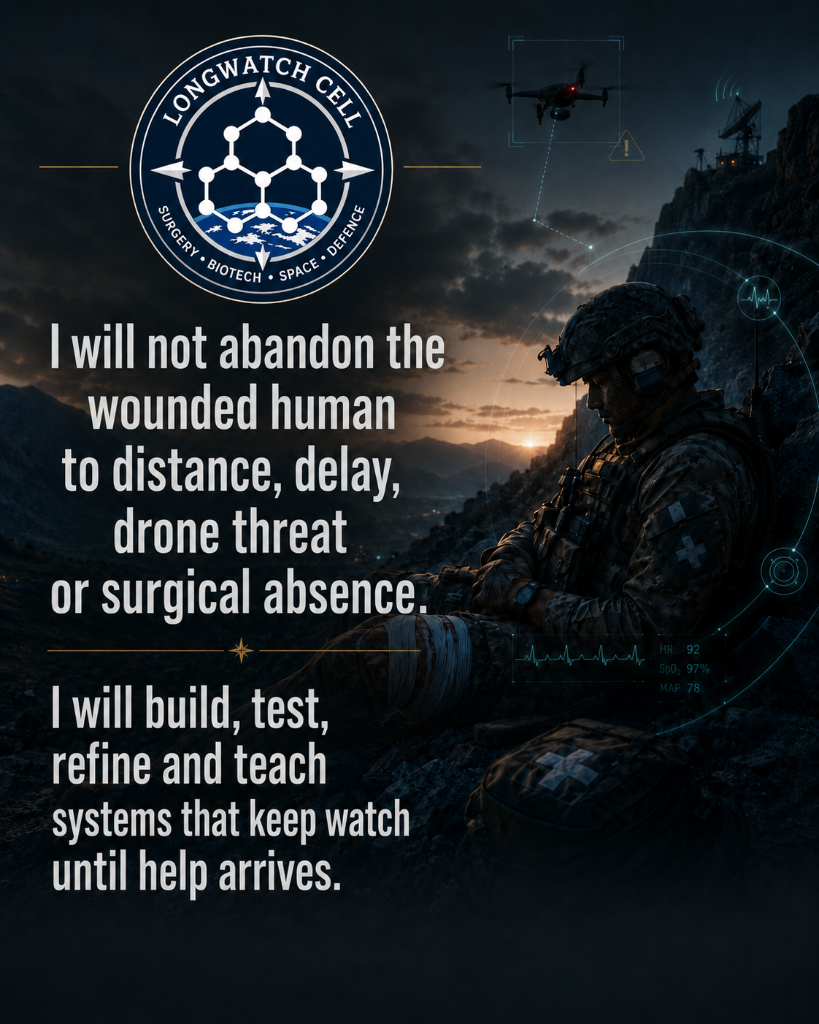
I will not abandon the wounded human to distance, delay, drone threat or surgical absence.
I will build, test, refine and teach systems that keep watch until help arrives.
OMFS Mentor &
Combat Reconstruction
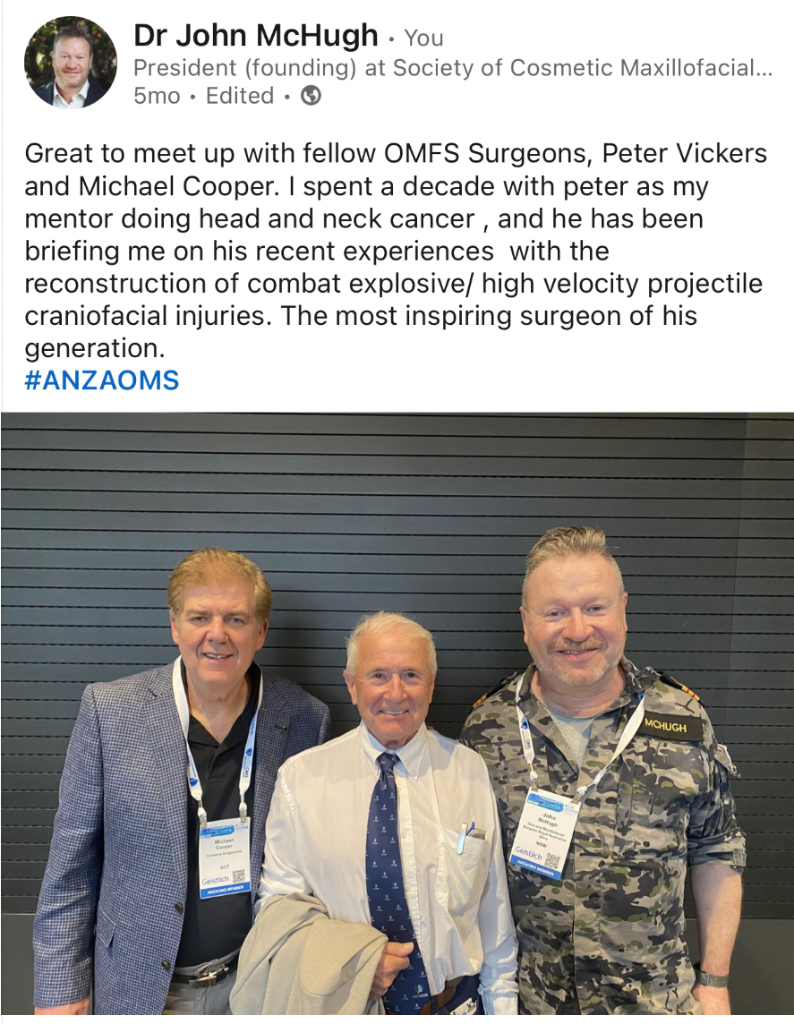
Great to meet up with fellow OMFS Surgeons, Peter Vickers and Michael Cooper. I spent a decade with Peter as my mentor doing head and neck cancer, and he has been briefing me on his recent experiences with the reconstruction of combat explosive / high velocity projectile craniofacial injuries.
The most inspiring surgeon of his generation.
European Association
for CMF Surgery
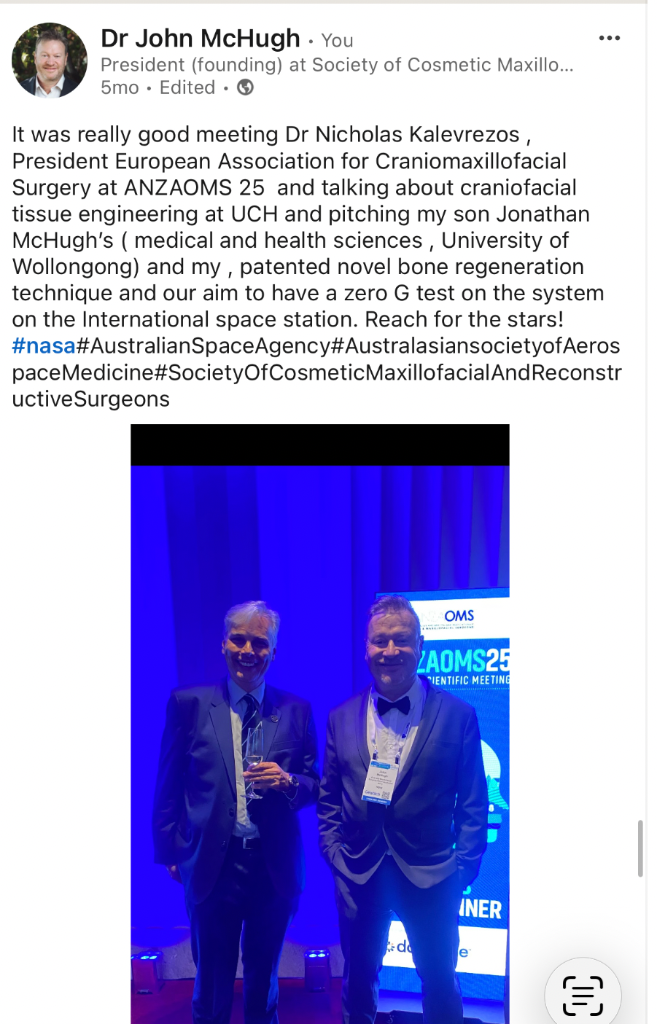
It was really good meeting Dr Nicholas Kalevrezos, President of the European Association for Craniomaxillofacial Surgery at ANZAOMS 25 — talking about craniofacial tissue engineering at UCH and pitching my son Jonathan McHugh's (Medical and Health Sciences, University of Wollongong) and my patented novel bone regeneration technique, and our aim to have a zero-G test on the system on the International Space Station.
Reach for the stars!
British Association
of OMFS
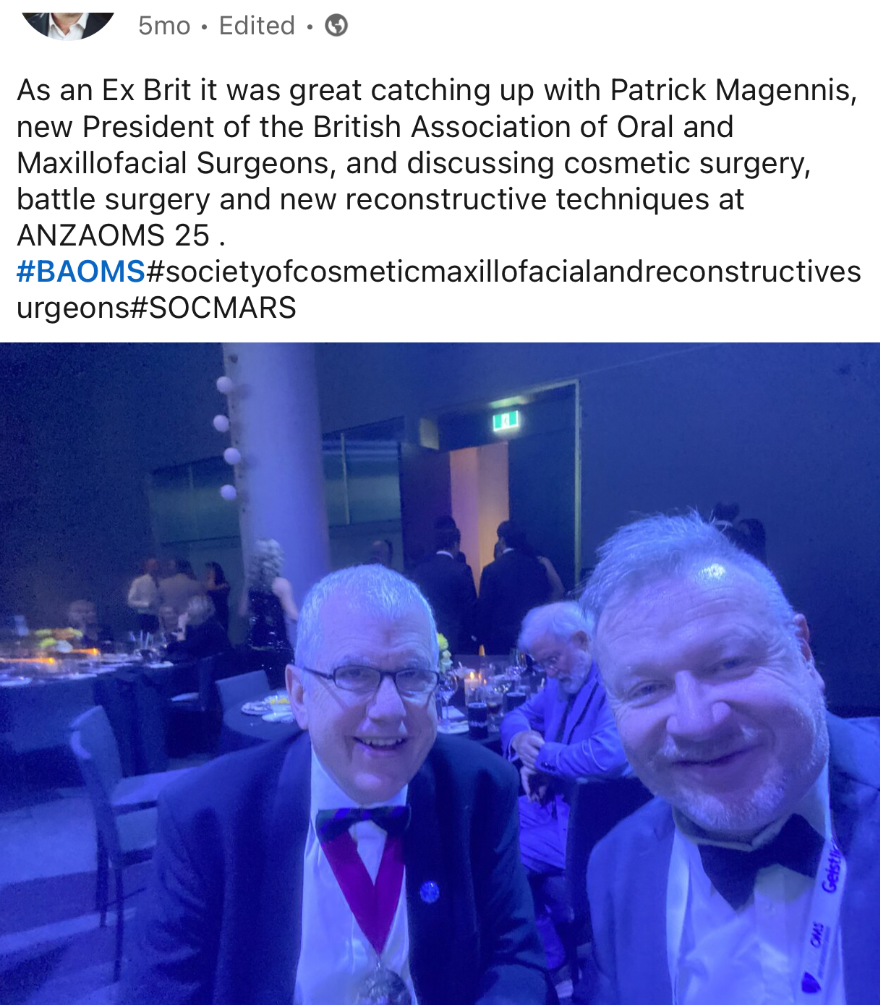
As an Ex Brit it was great catching up with Patrick Magennis, new President of the British Association of Oral and Maxillofacial Surgeons, and discussing cosmetic surgery, battle surgery and new reconstructive techniques at ANZAOMS 25.
Humanitarian Mission
Land vs Sea Platform
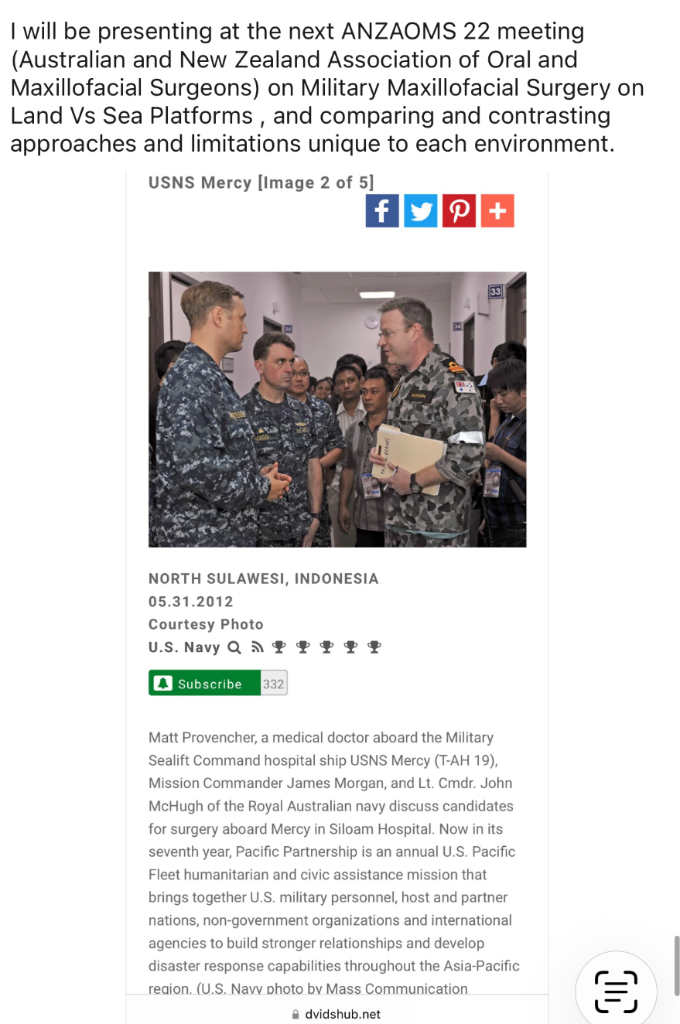
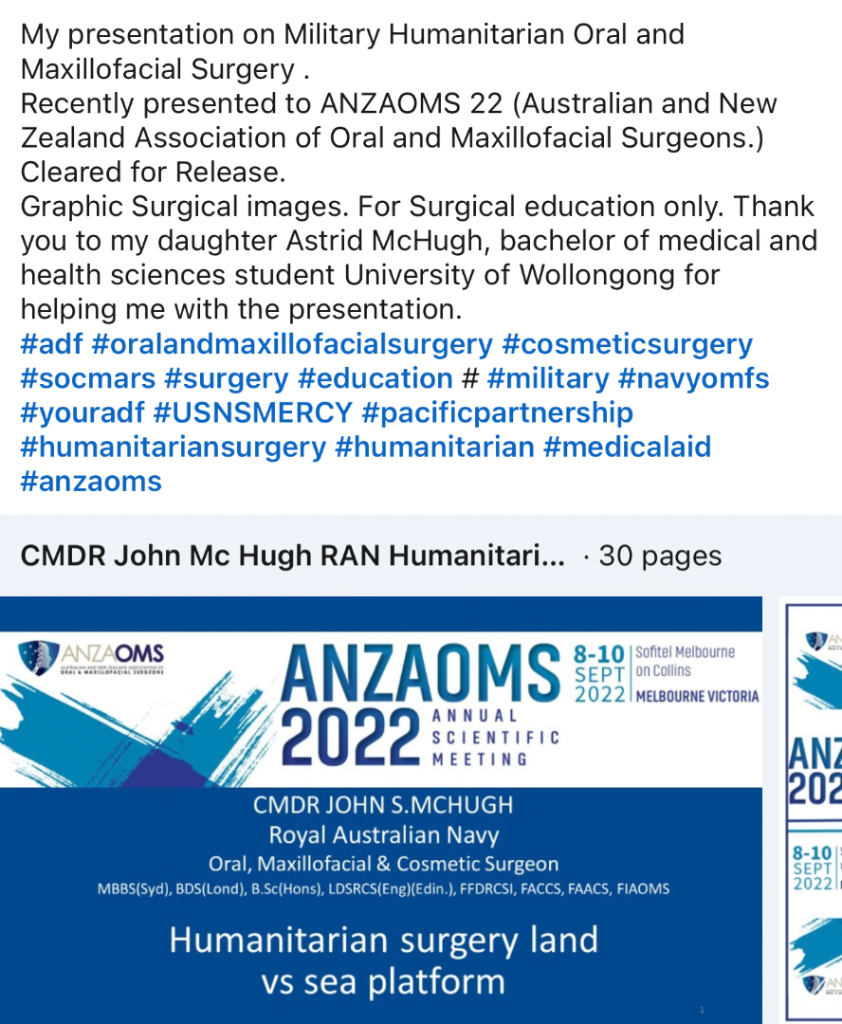
I will be presenting at the next ANZAOMS 22 meeting (Australian and New Zealand Association of Oral and Maxillofacial Surgeons) on Military Maxillofacial Surgery on Land vs Sea Platforms, and comparing and contrasting approaches and limitations unique to each environment.
Lt. Cmdr. John McHugh of the Royal Australian Navy discusses candidates for surgery aboard USNS Mercy (T-AH 19) in Siloam Hospital, North Sulawesi, Indonesia — part of Pacific Partnership, an annual U.S. Pacific Fleet humanitarian and civic assistance mission.
Partnership
of Hope
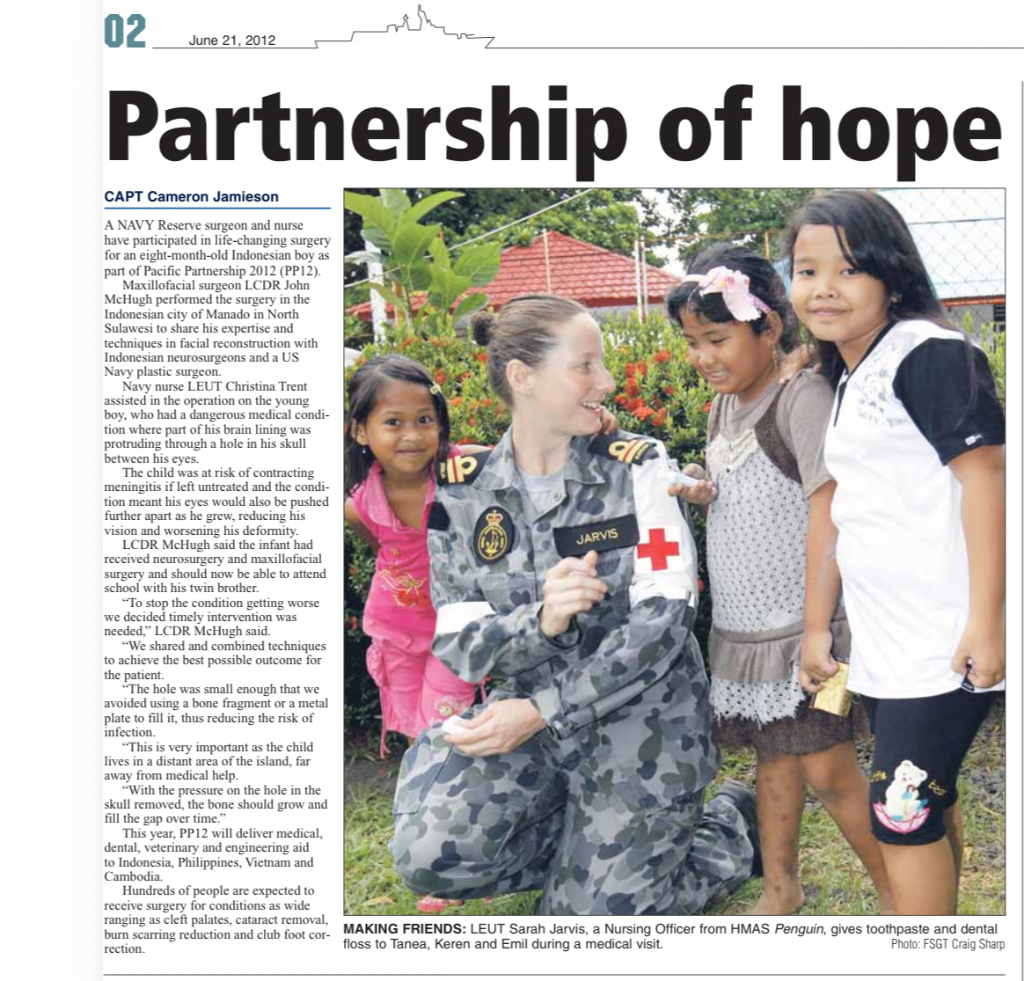
A Navy Reserve surgeon and nurse participated in life-changing surgery for an eight-month-old Indonesian boy as part of Pacific Partnership 2012. Maxillofacial surgeon LCDR John McHugh performed the surgery in Manado, North Sulawesi, sharing his expertise in facial reconstruction with Indonesian neurosurgeons and a US Navy plastic surgeon.
Navy nurse LEUT Christina Trent assisted in the operation on the young boy, who had a dangerous condition where part of his brain lining was protruding through a hole in his skull between his eyes. The child was at risk of meningitis and worsening deformity.
"To stop the condition getting worse we decided timely intervention was needed. We shared and combined techniques to achieve the best possible outcome for the patient. The hole was small enough that we avoided using a bone fragment or a metal plate to fill it, thus reducing the risk of infection."
"This is very important as the child lives in a distant area of the island, far away from medical help. With the pressure on the hole in the skull removed, the bone should grow and fill the gap over time."
Humanitarian Surgery
Land vs Sea Platform
My presentation on Military Humanitarian Oral and Maxillofacial Surgery, recently presented to ANZAOMS 22 (Australian and New Zealand Association of Oral and Maxillofacial Surgeons). Cleared for Release.
Thank you to my daughter Astrid McHugh, Bachelor of Medical and Health Sciences student, University of Wollongong, for helping me with the presentation.
Aviation Medical
Specialists Course
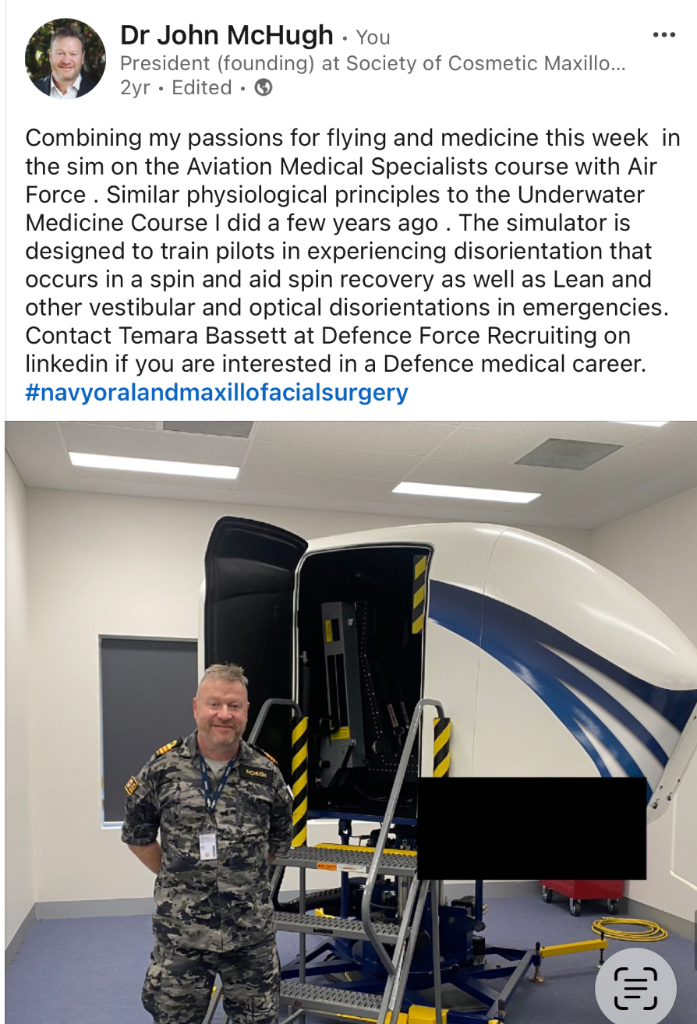
Combining my passions for flying and medicine this week in the sim on the Aviation Medical Specialists course with Air Force. Similar physiological principles to the Underwater Medicine Course I did a few years ago.
The simulator is designed to train pilots in experiencing disorientation that occurs in a spin and aid spin recovery as well as Lean and other vestibular and optical disorientations in emergencies.
Military OMFS
Readiness
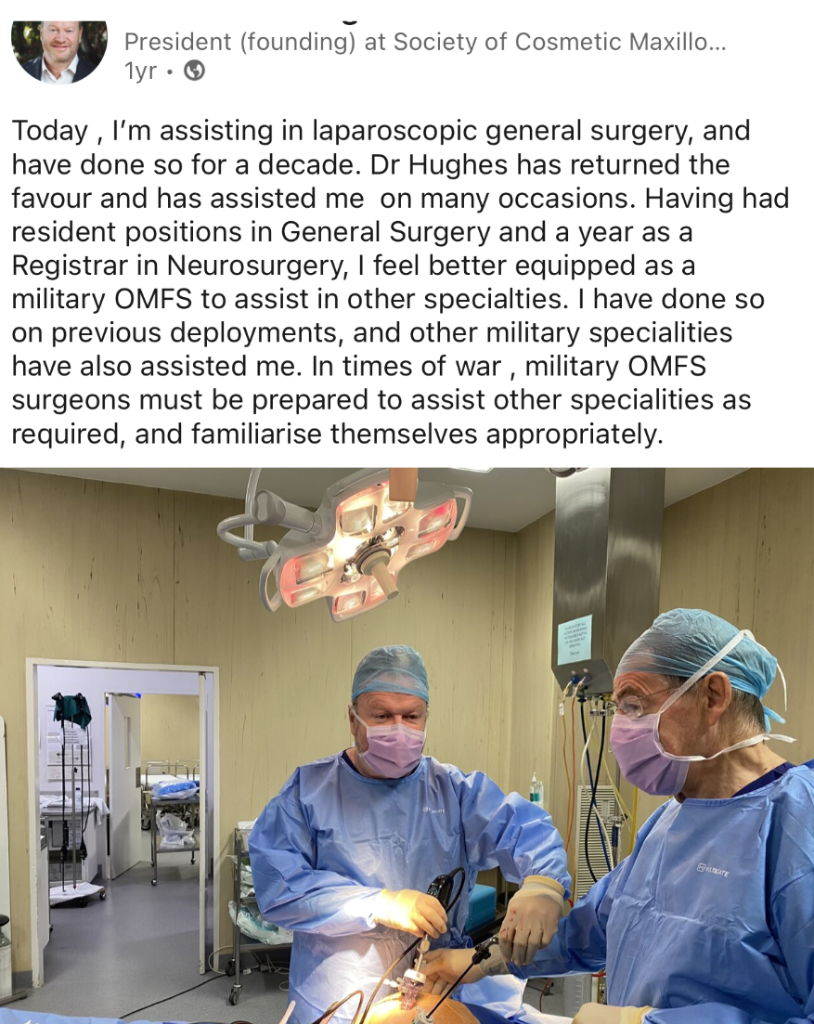
Today, I'm assisting in laparoscopic general surgery, and have done so for a decade. Dr Hughes has returned the favour and has assisted me on many occasions. Having had resident positions in General Surgery and a year as a Registrar in Neurosurgery, I feel better equipped as a military OMFS to assist in other specialties.
I have done so on previous deployments, and other military specialists have also assisted me. In times of war, military OMFS surgeons must be prepared to assist other specialties as required, and familiarise themselves appropriately.
Longwatch Cell ×
Platypus R&D
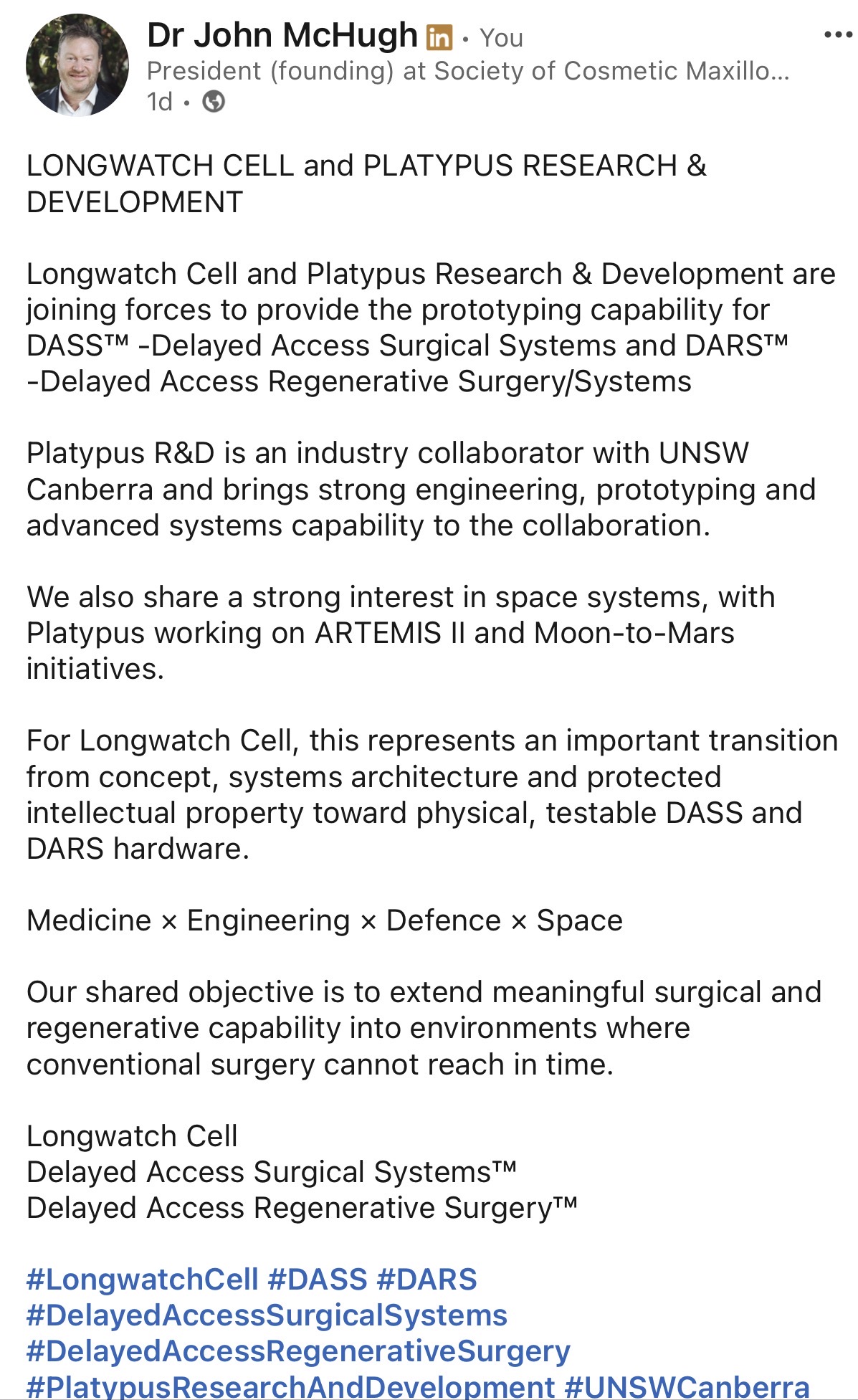
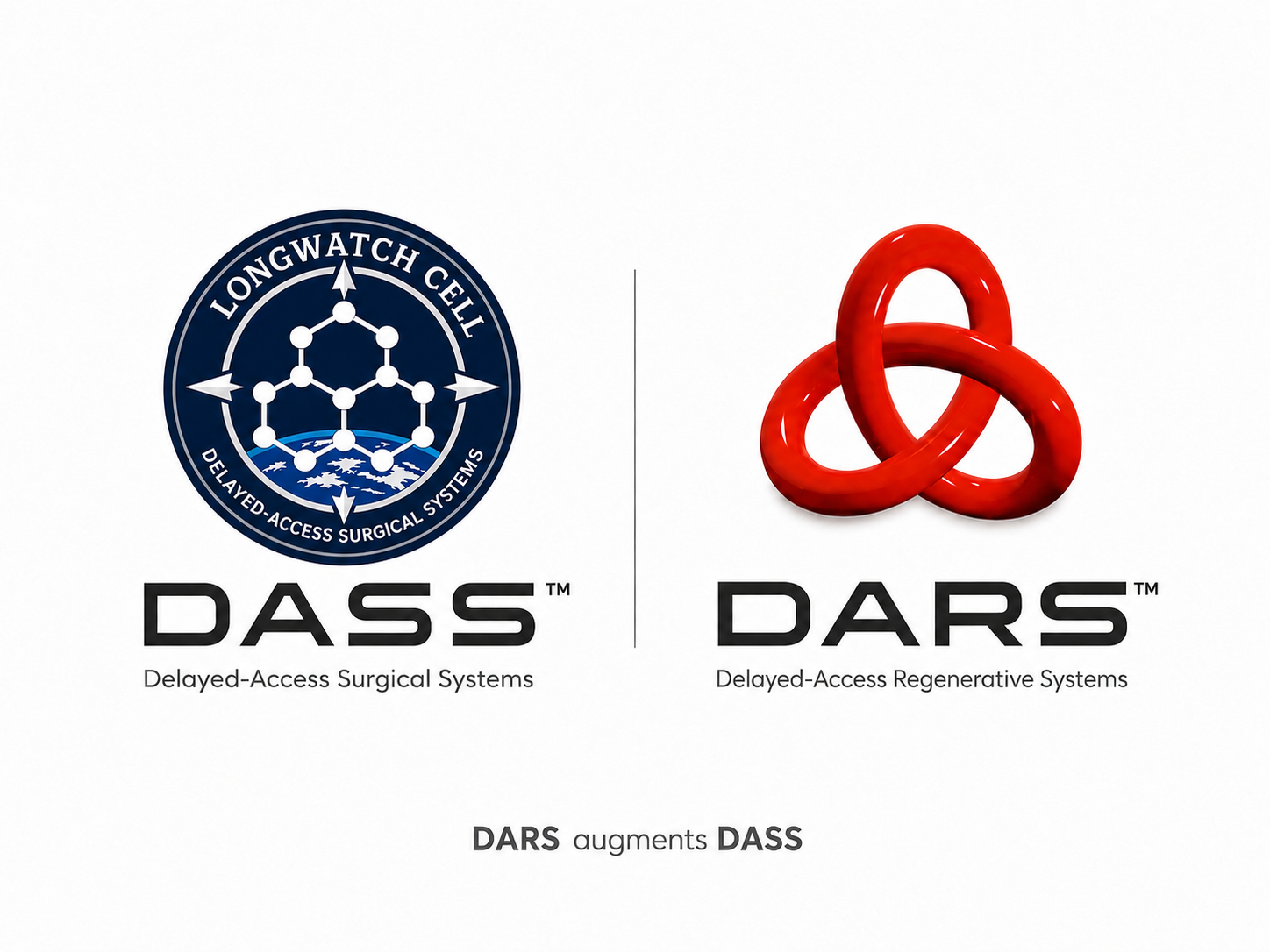
Longwatch Cell and Platypus Research & Development are joining forces to provide the prototyping capability for DASS™ — Delayed-Access Surgical Systems — and DARS™ — Delayed-Access Regenerative Surgery/Systems.
Platypus R&D is an industry collaborator with UNSW Canberra and brings strong engineering, prototyping and advanced systems capability to the collaboration. We also share a strong interest in space systems, with Platypus working on ARTEMIS II and Moon-to-Mars initiatives.
For Longwatch Cell, this represents an important transition from concept, systems architecture and protected intellectual property toward physical, testable DASS and DARS hardware.
EARLY TRANSLATIONAL PROGRESS
Longwatch Cell continues to progress its early translational pathway. We are in active discussion with CSIRO Health and Biosecurity regarding a proposed research contract and project pathway for assessment of the patent-pending novel mandibular scaffold / regeneration platform.
The focus now is disciplined validation, appropriate research governance, prototype development and translational planning.
Longwatch Cell remains early-stage, but the mission is becoming clearer: delayed-access surgical systems for environments where specialist care may be distant, delayed or constrained.
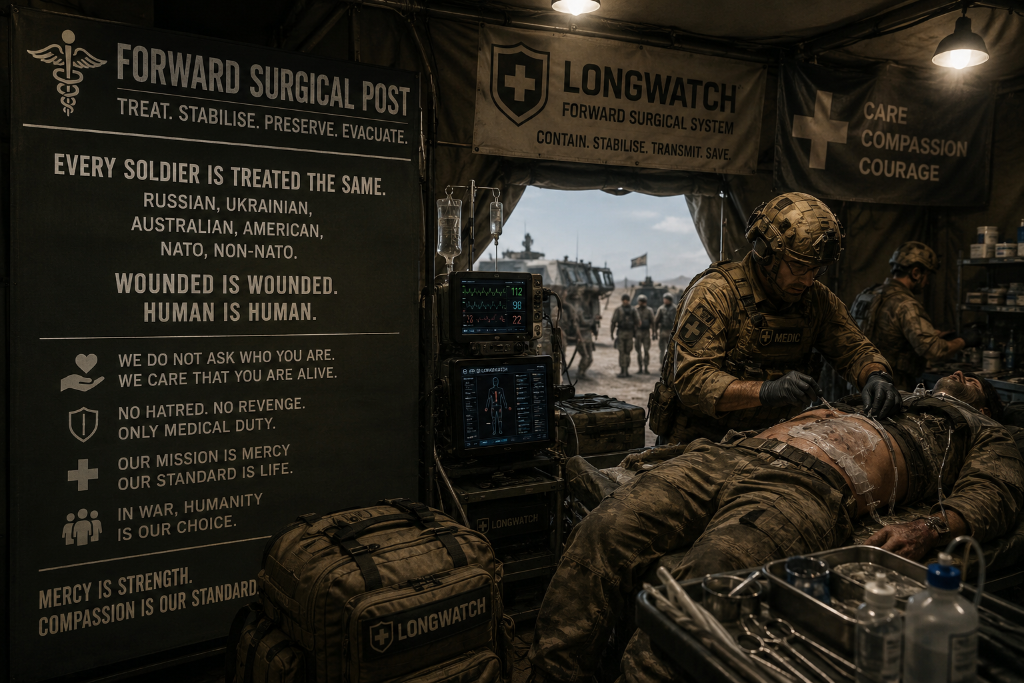
Forward
Surgical
Post
Treat. Stabilise. Preserve. Evacuate. The operational ethos of Longwatch forward surgical systems in austere and evacuation-denied environments.
SYSTEM
SELECTOR
Austere Battlefield Stabilisation
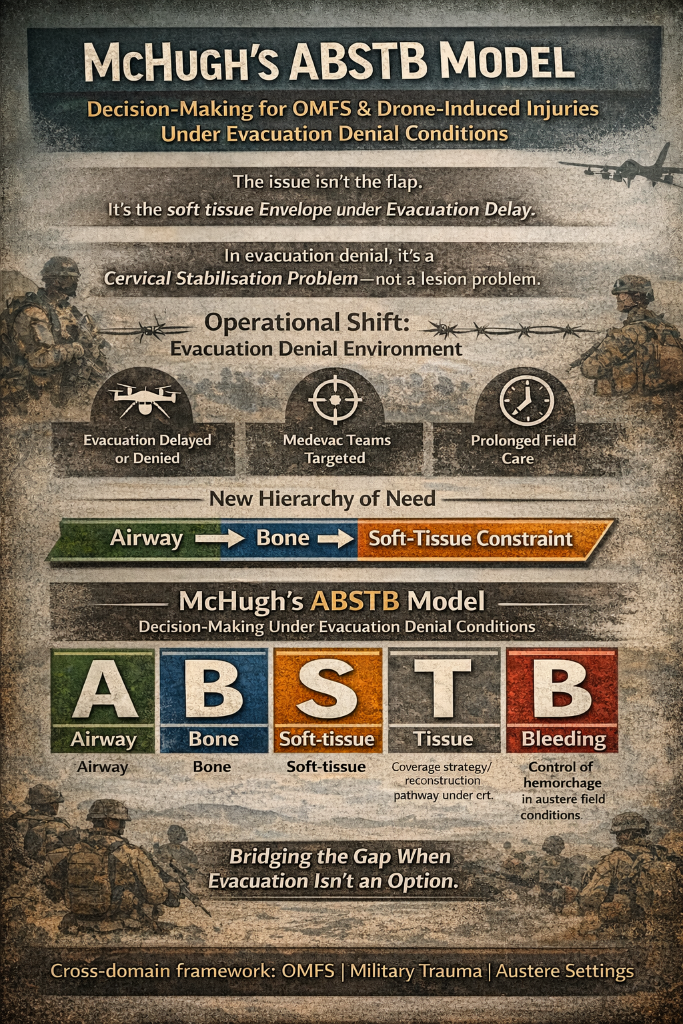
ABSTAB is a novel algorithm and austere battlefield stabilisation framework for the management of severe maxillofacial and craniofacial trauma in environments where definitive surgical care is not accessible.
McHugh's
ABSTAB
Model
Decision-making framework for OMFS & drone-induced injuries under evacuation denial conditions. Cross-domain: Military Trauma · OMFS · Austere Settings.
DR. JOHN
McHUGH
Longwatch Cell was founded by Dr John McHugh — an Oral and Maxillofacial Surgeon and Cosmetic Surgeon whose clinical training spans dental and medical degrees, environmental science, and advanced subspecialty qualifications across multiple surgical disciplines.
His operational experience spans military deployments including service aboard USNS Mercy (TAH-19), aviation and underwater medicine, and multiple austere environments — experience that directly informs how Longwatch Cell conceptualises the modern battlespace.
This is not technology for its own sake. It is continuous casualty stewardship across the ecological battlespace — a philosophy forged across decades of surgical practice and operational medicine.
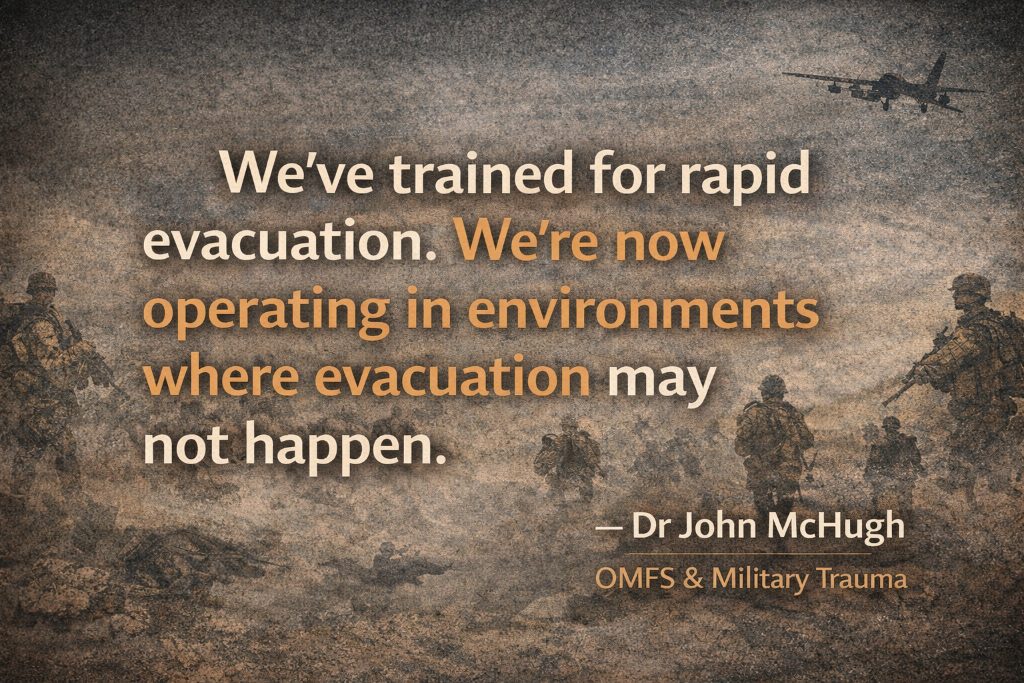
"The aim is not technology for its own sake. It is continuous casualty stewardship across the ecological battlespace."
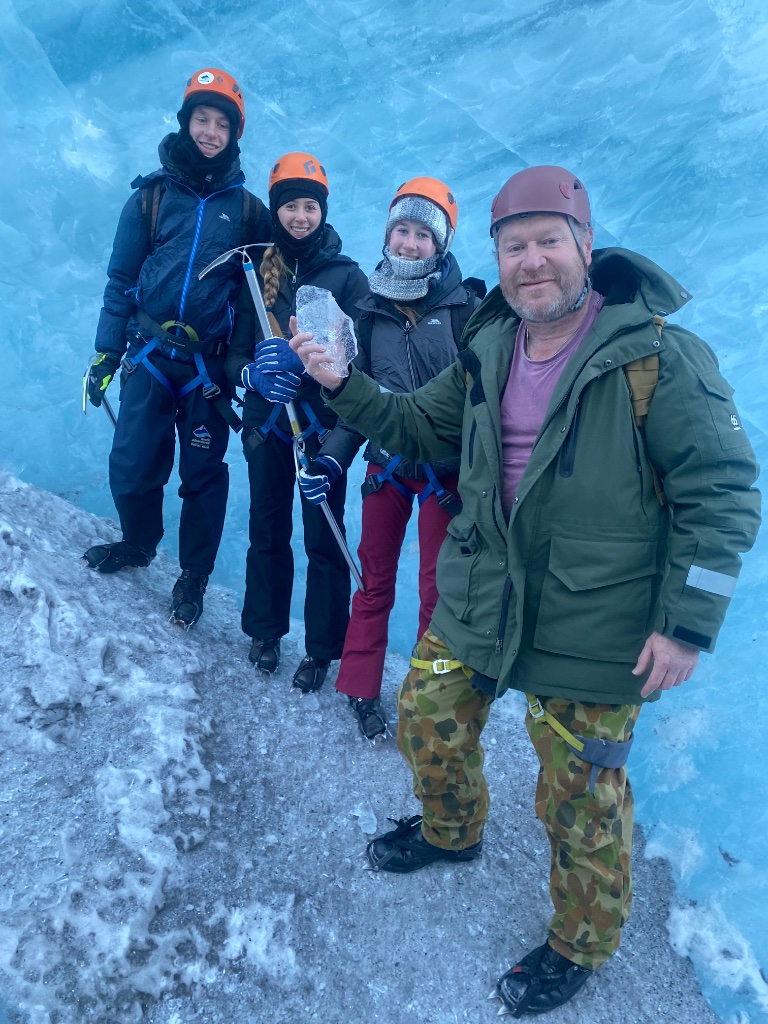
Over the course of my career, I've consistently been drawn to the challenges of surgery in constrained environments — where resources are limited, evacuation is uncertain, and conventional pathways are not always feasible.
This has been shaped by experience across:
- ▸Military deployments in austere settings
- ▸Training in submarine and underwater medicine
- ▸Military aviation medicine
- ▸Ongoing work in space medicine
- ▸General aviation flying
These environments share a common theme: they demand different thinking — not just different techniques. In parallel with clinical work, I've been developing concepts around reconstruction and surgical management under these constraints, including recent patent work. This has evolved into a broader exploration of how we adapt surgical systems for extreme and resource-limited conditions.
This is an early-stage, evolving area — but one that will become increasingly relevant across military, civilian, and future space medicine contexts.
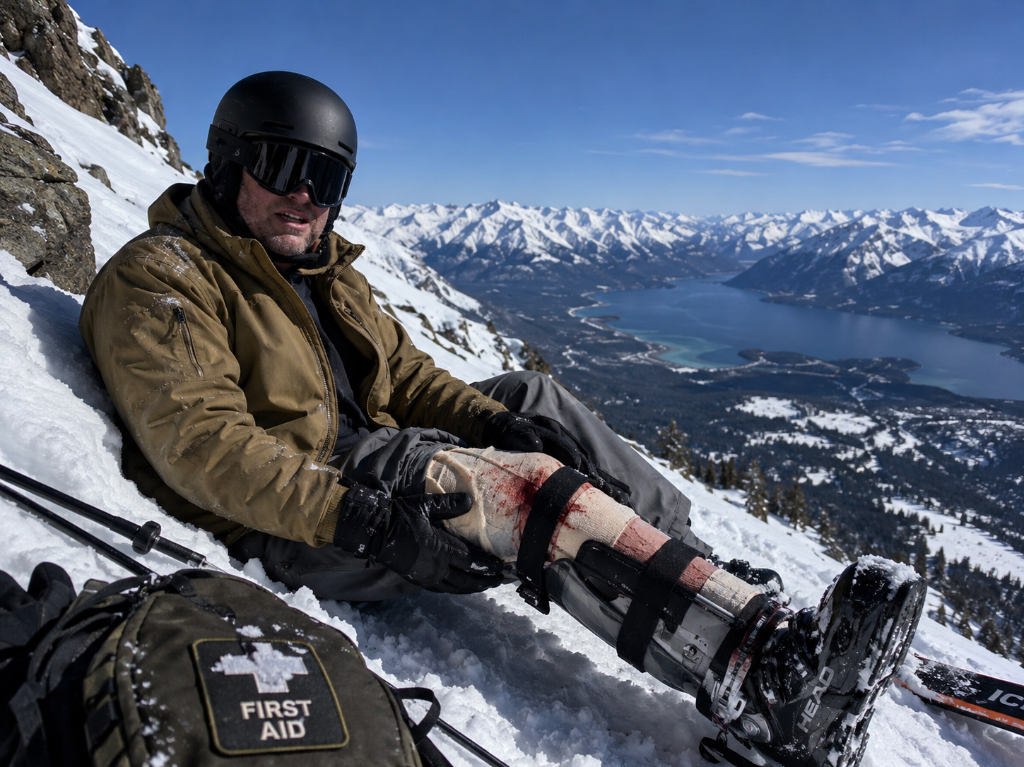
Longwatch Cell is also informed by personal experience. After sustaining a severe skiing injury with fractured tibia, fibula and malleolus, requiring multiple operations to save the leg, I experienced first-hand the vulnerability of trauma in a cold, isolated mountain environment.
That experience reinforced a central Longwatch Cell principle: injury is not only anatomical. It is shaped by distance, exposure, delay, pain, uncertainty and dependence on rescue. The wounded human must be supported and kept salvageable until definitive care becomes possible.
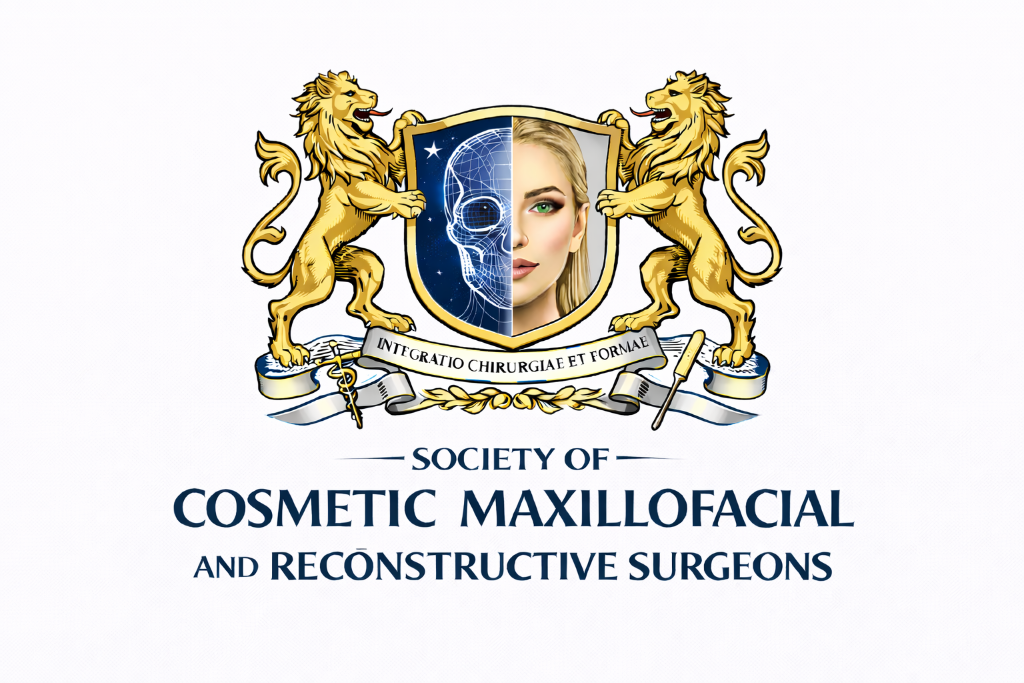
Integratio Chirurgiae et Formae
Integration of surgery and form
SOCMARS
When I created SOCMARS — the Society of Cosmetic, Maxillofacial and Reconstructive Surgeons — several years ago, the society has been my way of exploring a central surgical idea, and a distillation of the reasons why I undertook a cosmetic surgery fellowship as well as an OMFS fellowship whilst serving as a military surgeon.
I have advocated for over a decade that military OMFS surgeons should study cosmetic surgery — and that thinking was somewhat prescient when faced with the current craniofacial drone injury profile that I have been addressing in the design of my ABSTAB algorithm for OMFS drone injury management.
Cosmetic
Never simply about appearance. It was about soft-tissue intelligence: vascularity, scars, symmetry, proportion, tension, closure and respect for living tissue.
Maxillofacial
Bone, airway, trauma, fixation, occlusion and facial architecture — the structural discipline that anchors reconstruction to function.
Reconstructive
The deeper question: how do we restore the wounded human when anatomy, environment and time are against us?
This demonstrates the evolution in thinking: cosmetic, maxillofacial and reconstructive surgery are not separate worlds, but overlapping disciplines of tissue, form, function, exposure, healing and judgement.
ABSTAB — OMFS drone injury management algorithm, and ear reconstruction after cancer.
ABSTAB — Australasian Military Medicine Association conference.
With Astrid McHugh: novel management of traumatic rectus tear with incarcerated hernia using subrectus parachuted acellular dermal matrix via miniabdominoplasty approach — demonstrated for combat abdominal wall injuries.
Longwatch Cell is the next stage of that thinking. It takes the philosophy behind SOCMARS and translates it into delayed-access surgical systems: devices and frameworks designed for environments where definitive surgical care may be distant, delayed, dangerous or constrained.
Battlefield injury, remote mining trauma, space medicine, disaster response and austere surgery all share the same central problem: the patient may survive the injury, but not the interval.
SOCMARS asked the question.
Longwatch Cell is building the answer.
PROFESSIONAL
CONTRIBUTIONS
A selected record of peer-reviewed articles, research collaborations, field reports and conference presentations documenting the clinical and academic work underpinning Longwatch Cell.
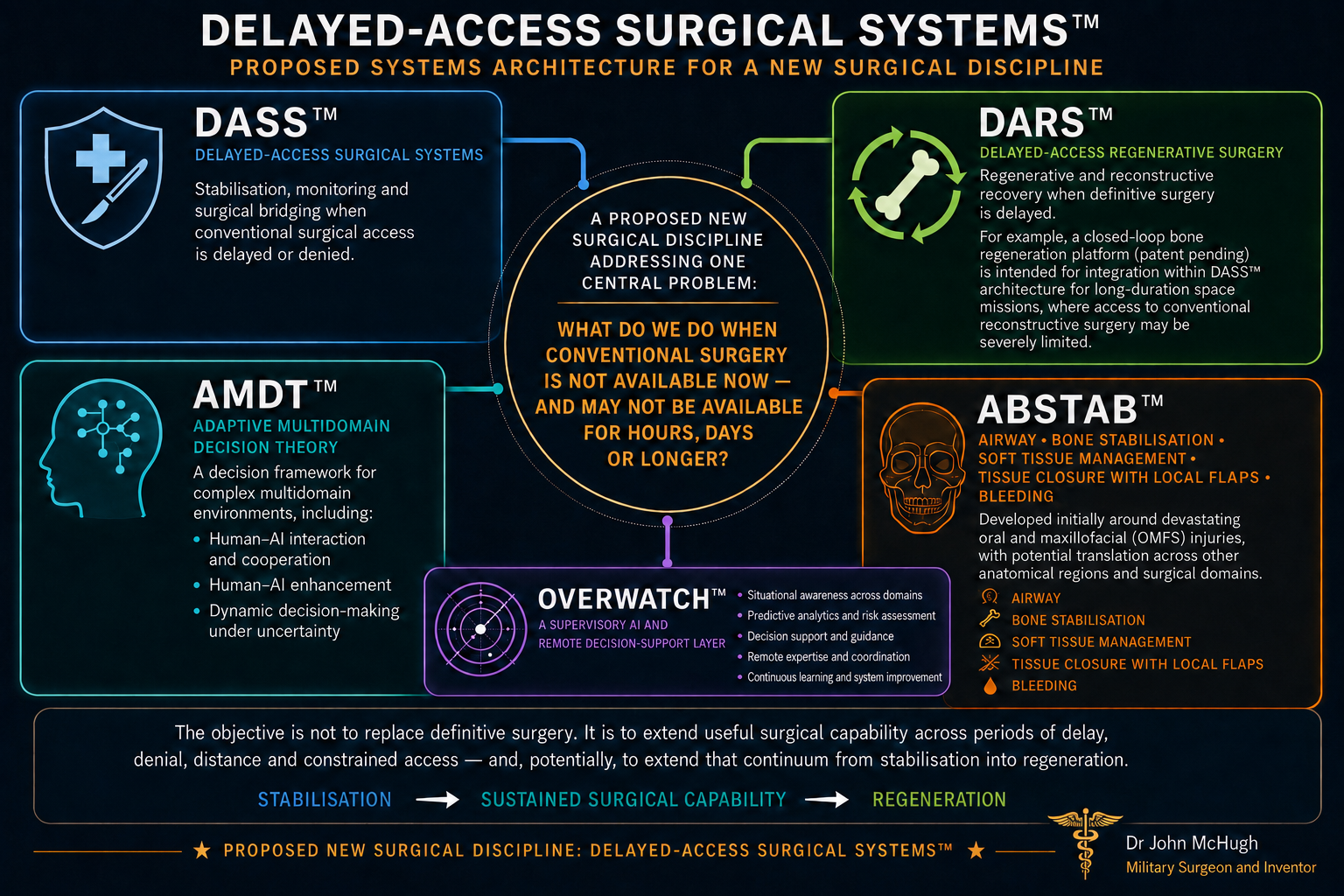
Delayed-Access Surgical Systems™ — Proposed Systems Architecture
Hub-and-spoke architecture defining a new surgical discipline addressing the central problem of delayed or denied conventional surgery — integrating DASS™, DARS™, AMDT™, ABSTAB™ and OVERWATCH™ across stabilisation, sustained capability and regeneration.
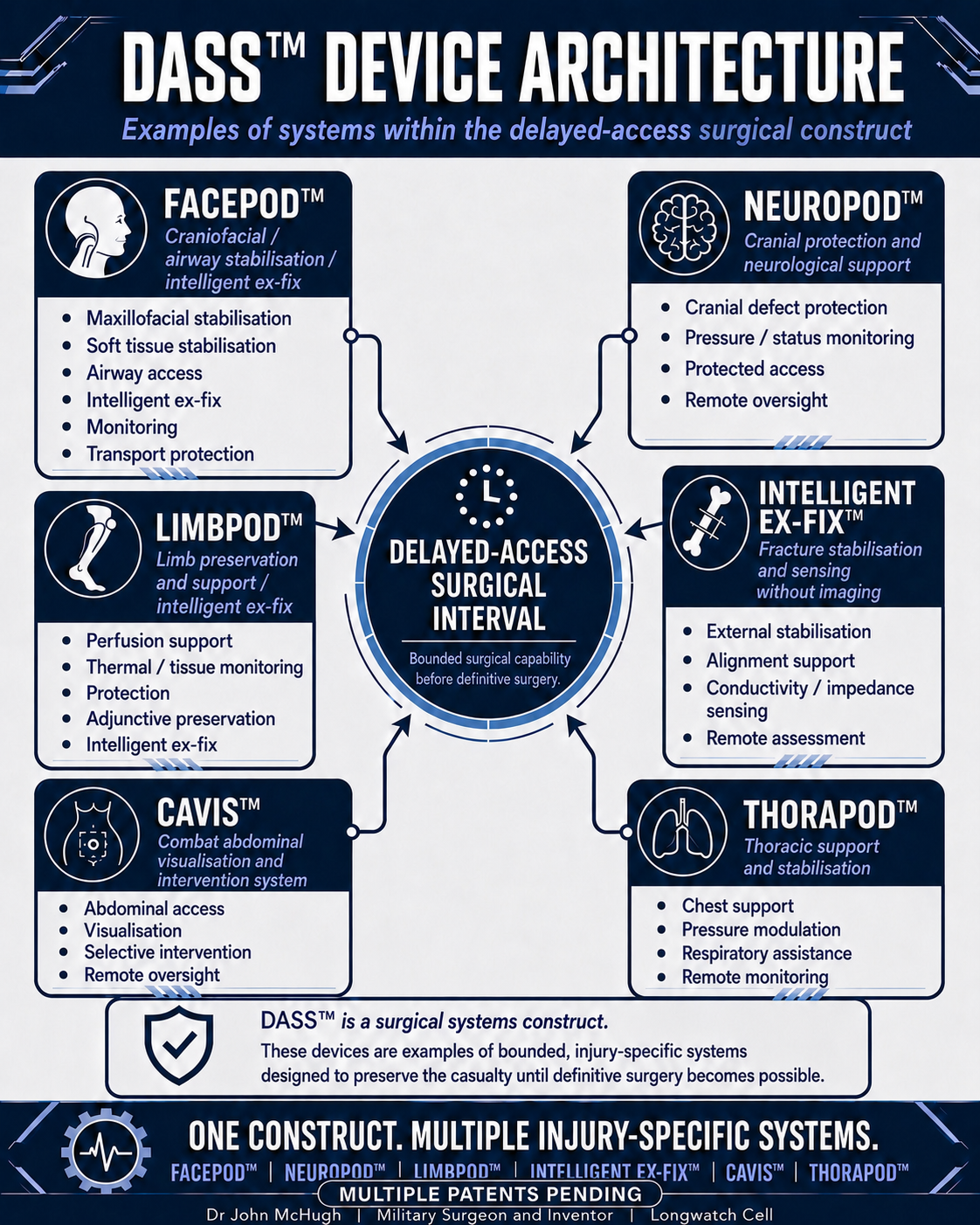
DASS™ Device Architecture
Examples of bounded, injury-specific systems within the delayed-access surgical construct — FACEPOD™, NEUROPOD™, LIMBPOD™, INTELLIGENT EX-FIX™, CAVIS™, THORAPOD™. One construct, multiple injury-specific systems. Multiple patents pending.
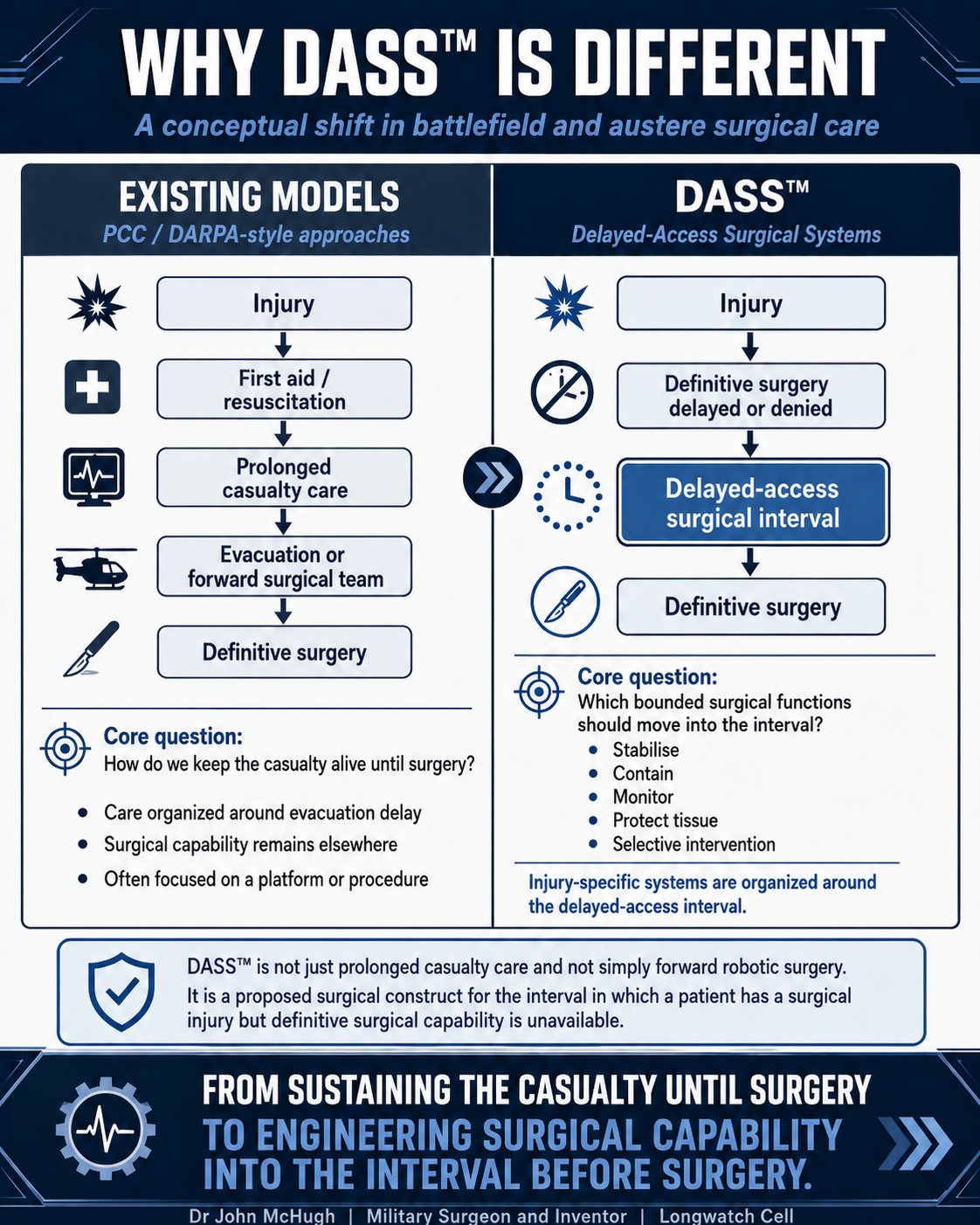
Why DASS™ Is Different
A conceptual shift in battlefield and austere surgical care — from sustaining the casualty until surgery, to engineering surgical capability into the interval before definitive surgery.
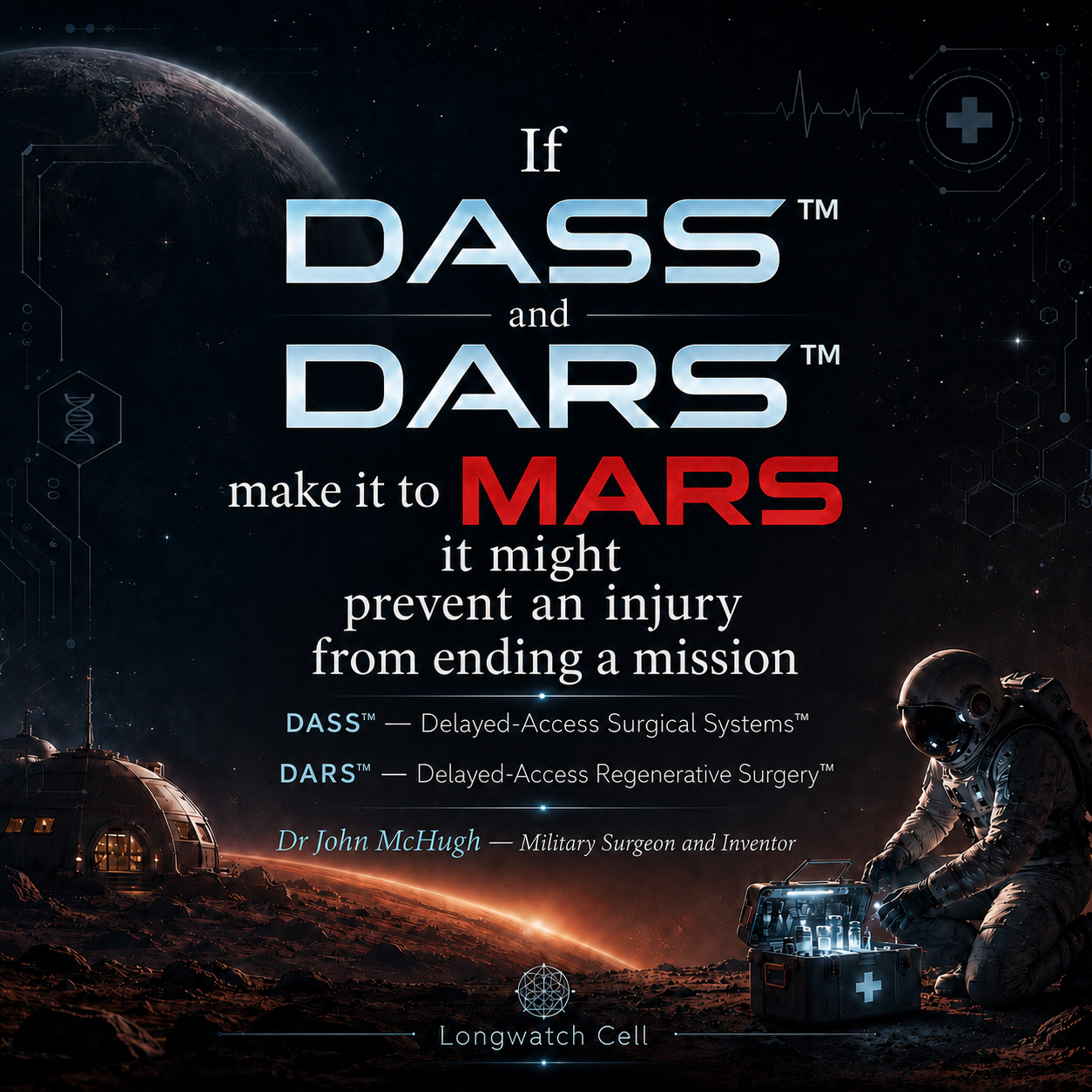
If DASS™ and DARS™ Make It To MARS
Mission concept: how delayed-access surgical and regenerative systems could prevent an injury from ending a long-duration space mission.
DARS™ — Delayed-Access Regenerative Systems
Brand and concept identity for the regenerative and reconstructive recovery layer intended for integration within DASS™ architecture for long-duration missions.
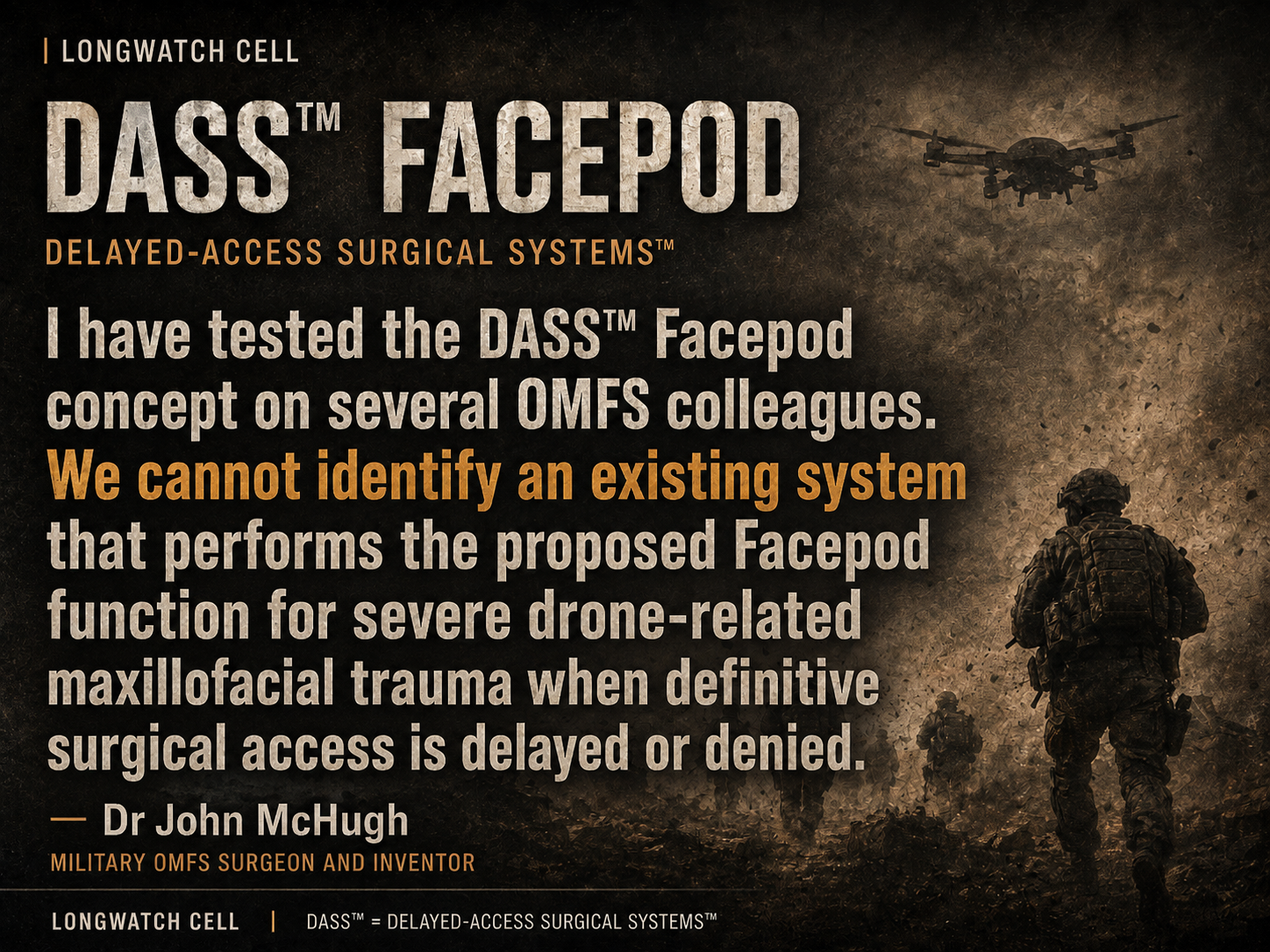
DASS™ FACEPOD — Field Endorsement
Dr John McHugh: "We cannot identify an existing system that performs the proposed Facepod function for severe drone-related maxillofacial trauma when definitive surgical access is delayed or denied." Tested across OMFS colleagues — no existing system performs this function.
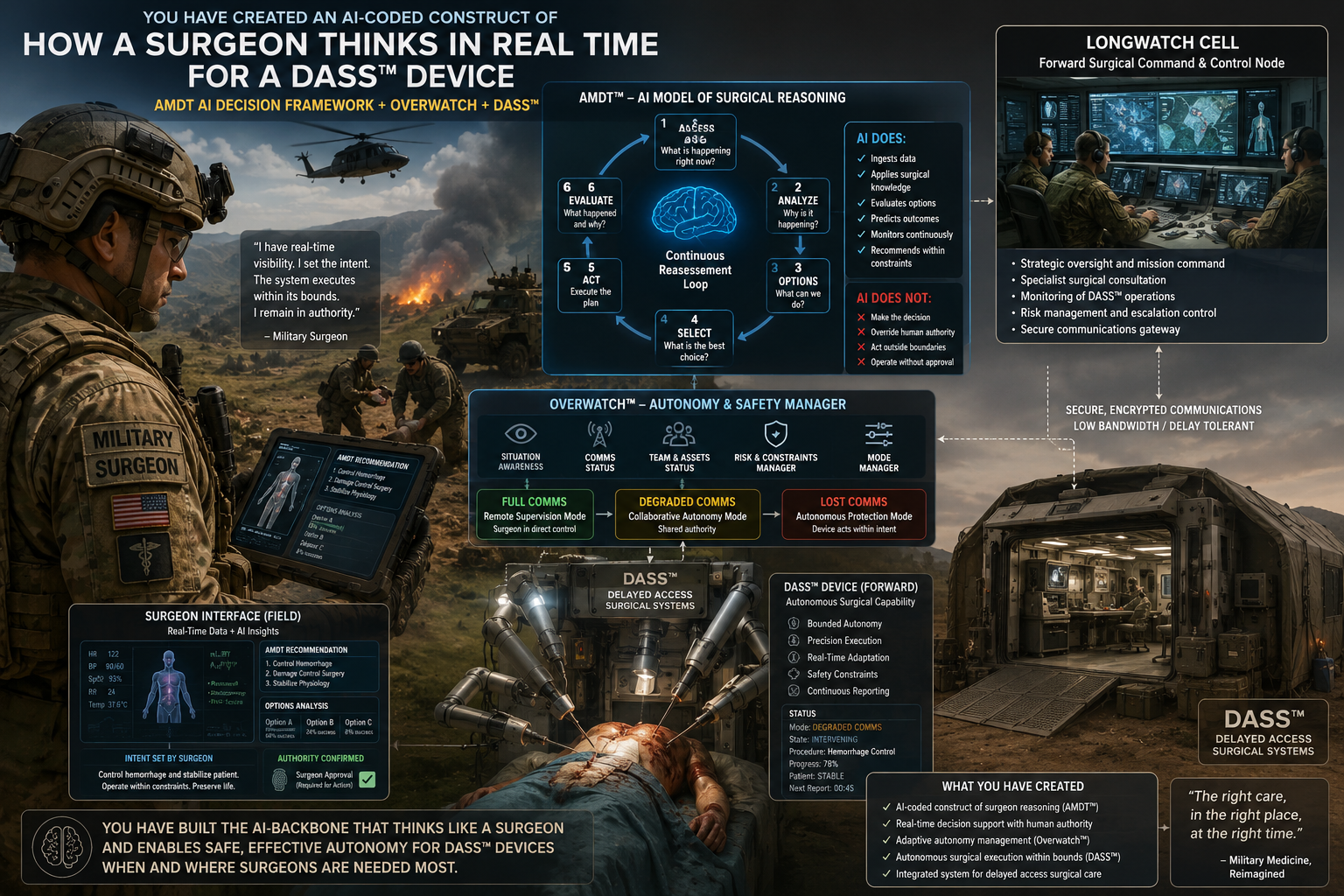
AMDT™ AI-Coded Construct of Surgical Reasoning
A real-time AI construct of how a surgeon thinks — integrating the AMDT™ AI decision framework with OVERWATCH™ autonomy/safety management and DASS™ forward surgical systems. Bounded autonomy, human override, shared-to-lost comms authority transitions.
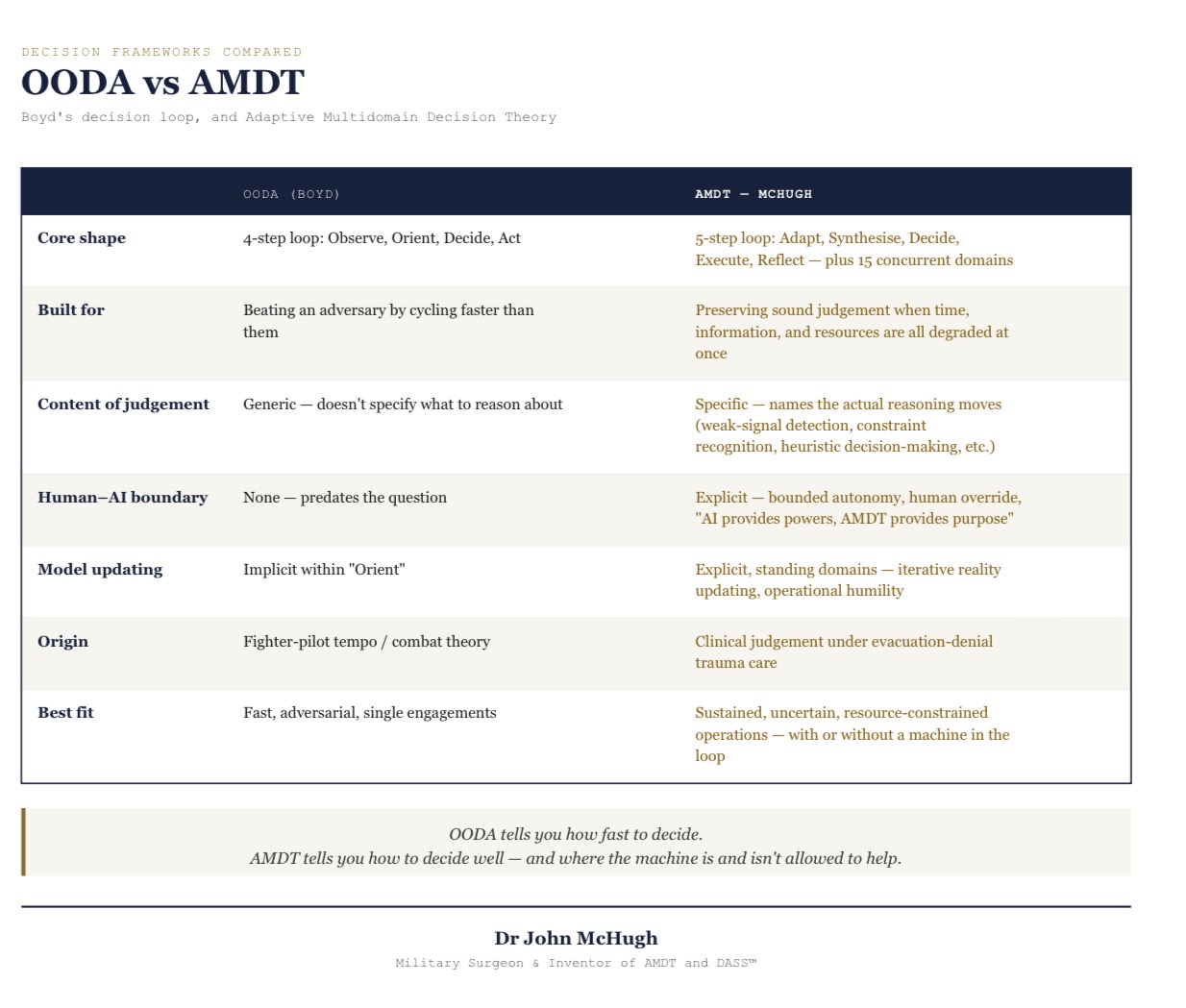
OODA vs AMDT — Decision Frameworks Compared
Boyd's OODA loop versus McHugh's Adaptive Multidomain Decision Theory: 4-step vs 5-step-plus-15-domains, adversarial tempo vs sustained resource-constrained judgement, and the explicit human–AI boundary AMDT brings to evacuation-denied trauma care.
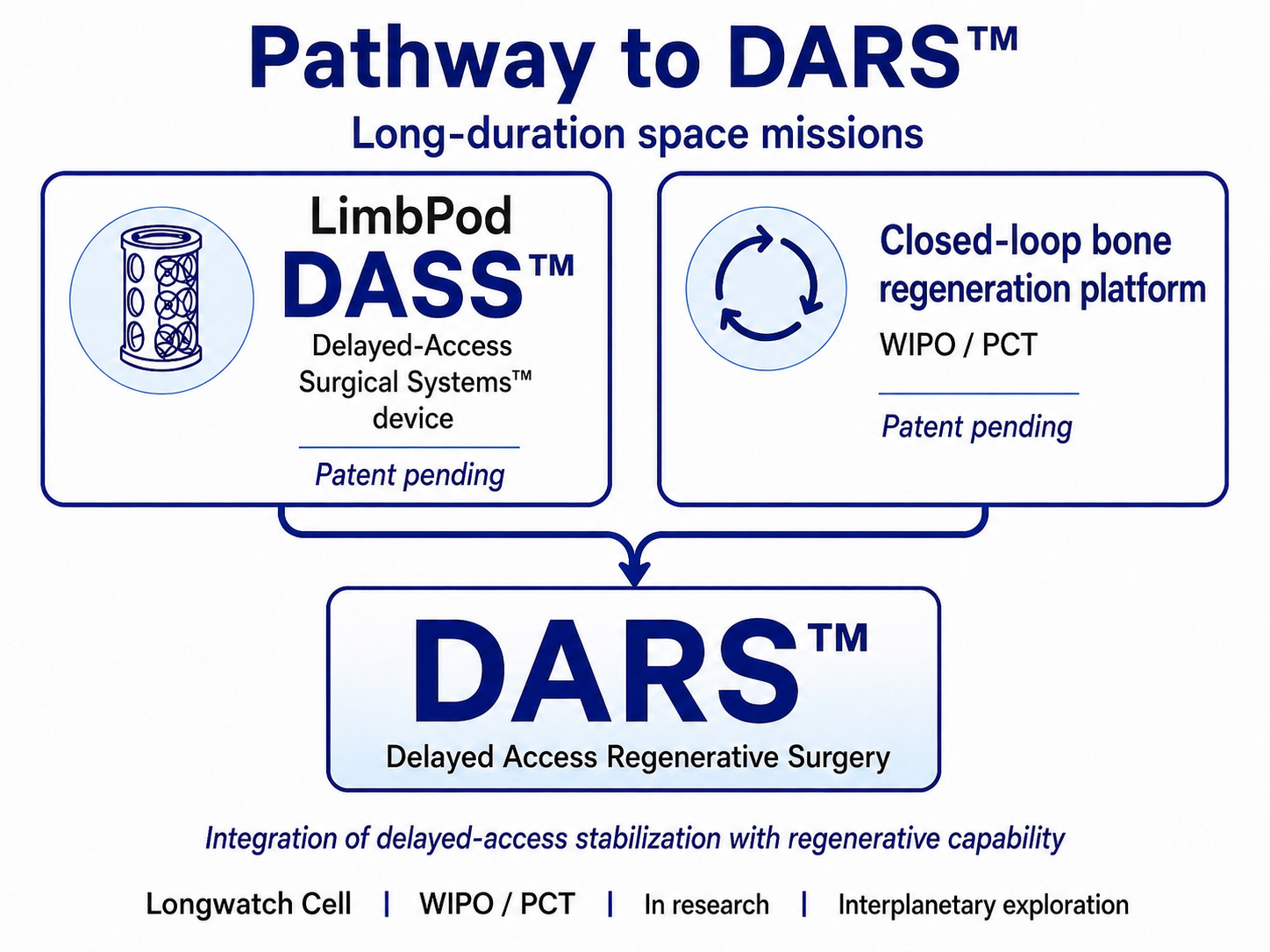
Pathway to DARS™
Integration pathway for long-duration space missions — combining the LimbPod DASS™ delayed-access surgical device with the closed-loop bone regeneration platform (WIPO / PCT) into Delayed-Access Regenerative Surgery (DARS™). In research, for interplanetary exploration.
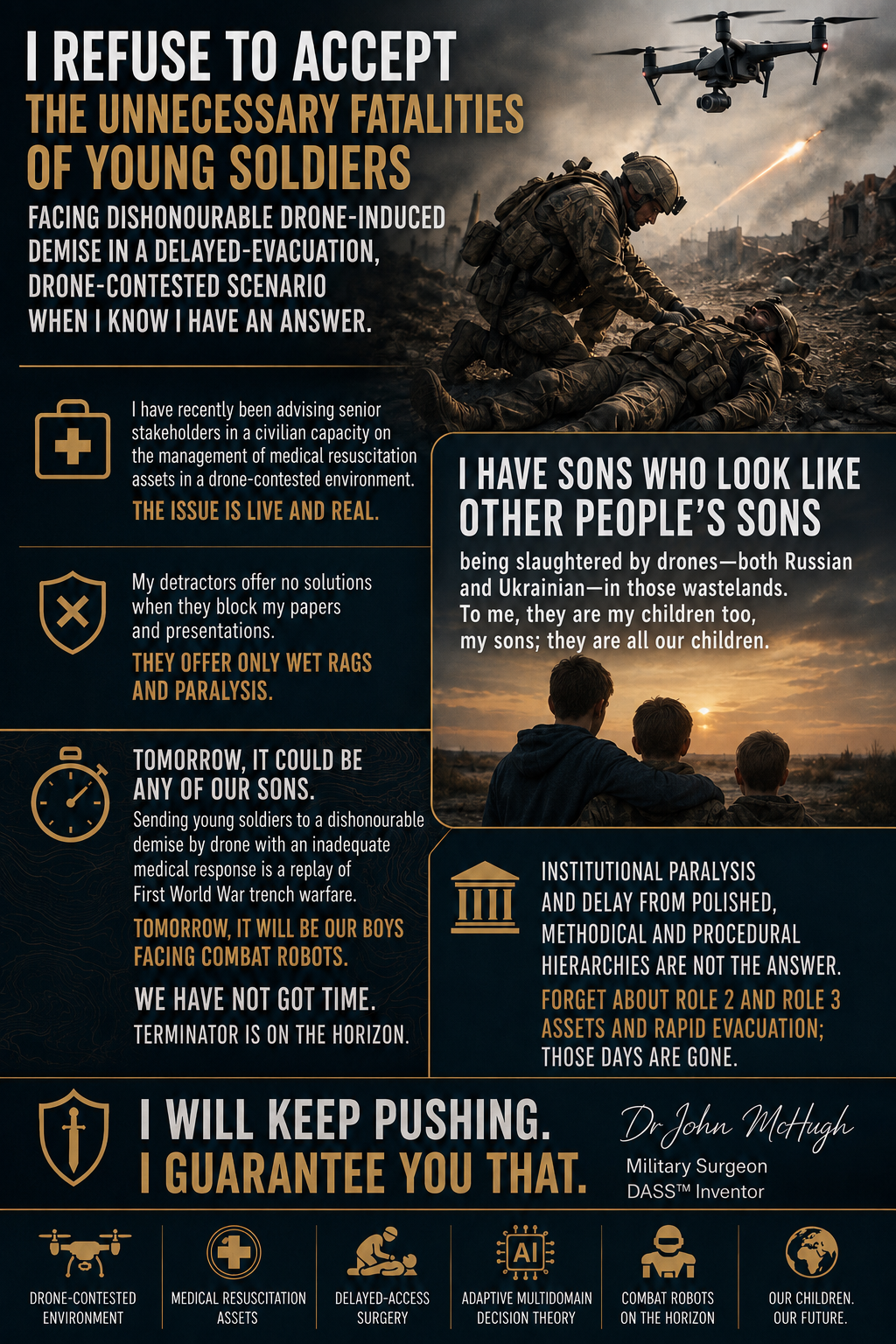
A Refusal to Accept Unnecessary Fatalities
A position statement from Dr John McHugh on drone-contested, delayed-evacuation scenarios — the case for delayed-access surgical systems, adaptive multidomain decision theory, and decisive action against institutional paralysis as combat robots approach the horizon.
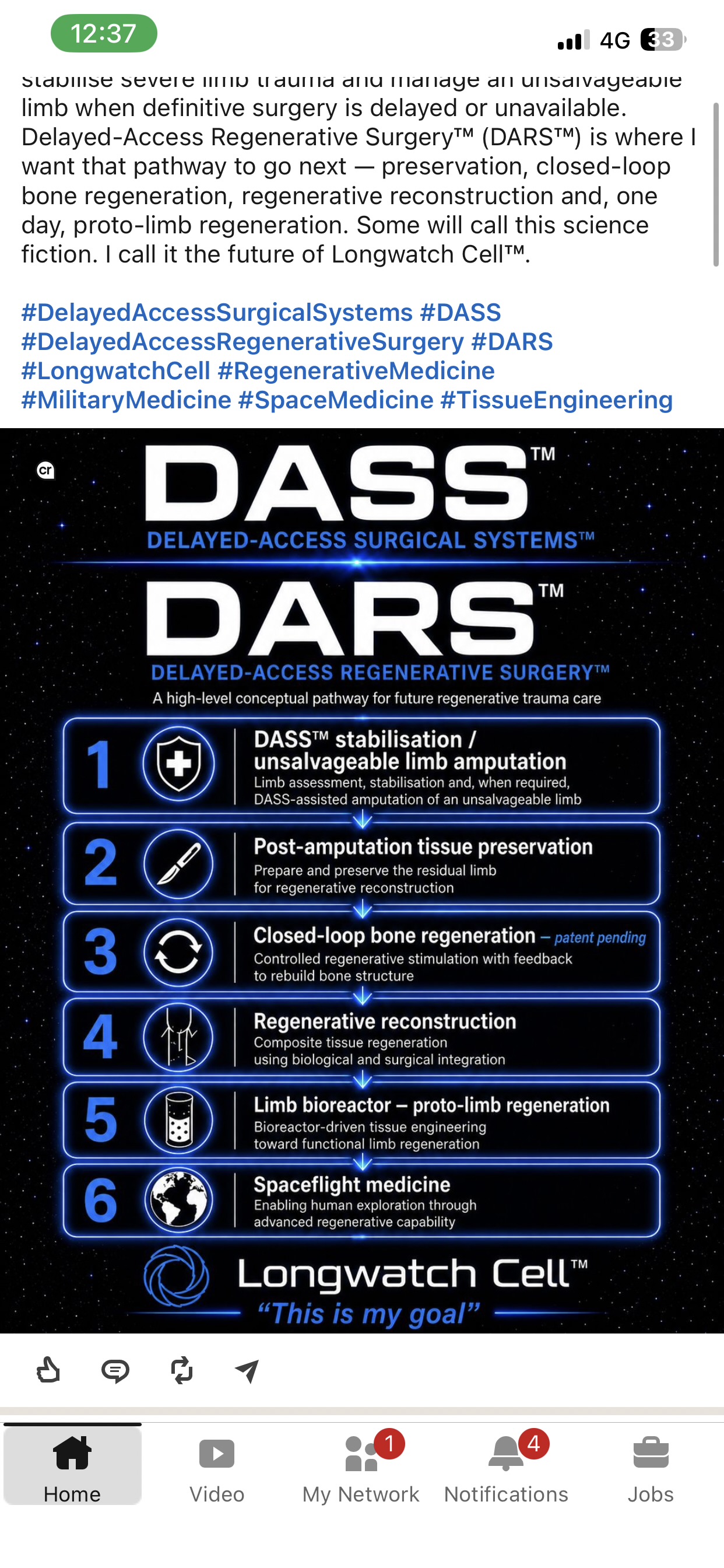
DARS™ — Delayed-Access Regenerative Surgery Pathway
A high-level conceptual pathway for future regenerative trauma care: DASS™ stabilisation and unsalvageable limb amputation, post-amputation tissue preservation, closed-loop bone regeneration (patent pending), regenerative reconstruction, limb bioreactor proto-limb regeneration, and spaceflight medicine. "Some will call this science fiction. I call it the future of Longwatch Cell™."
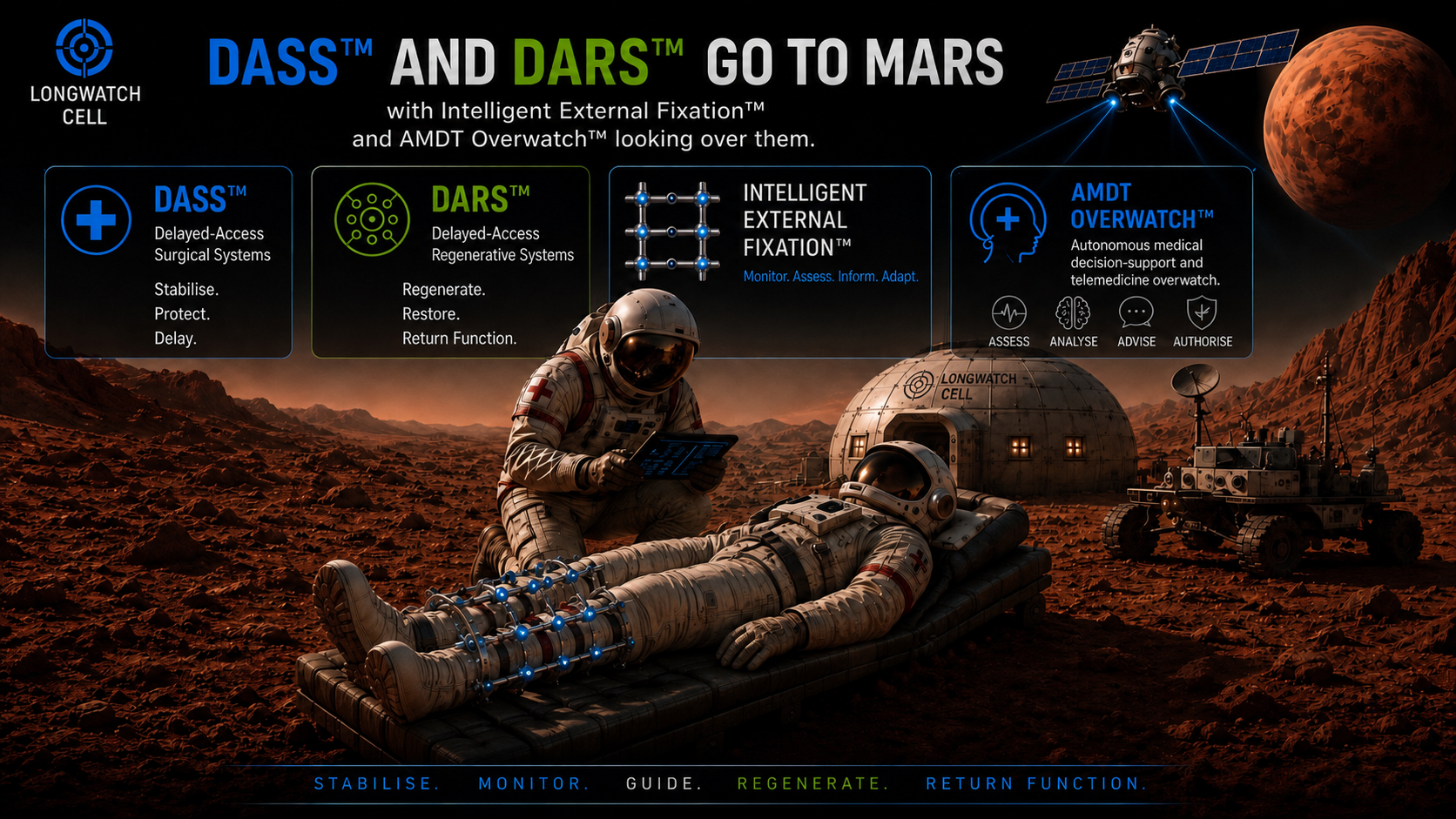
DASS™ and DARS™ Go to Mars
Mission concept: how DASS™ (Delayed-Access Surgical Systems — Stabilise. Protect. Delay.) and DARS™ (Delayed-Access Regenerative Systems — Regenerate. Restore. Return Function.) integrate with Intelligent External Fixation™ and AMDT Overwatch™ autonomous medical decision-support to enable human exploration on long-duration space missions.
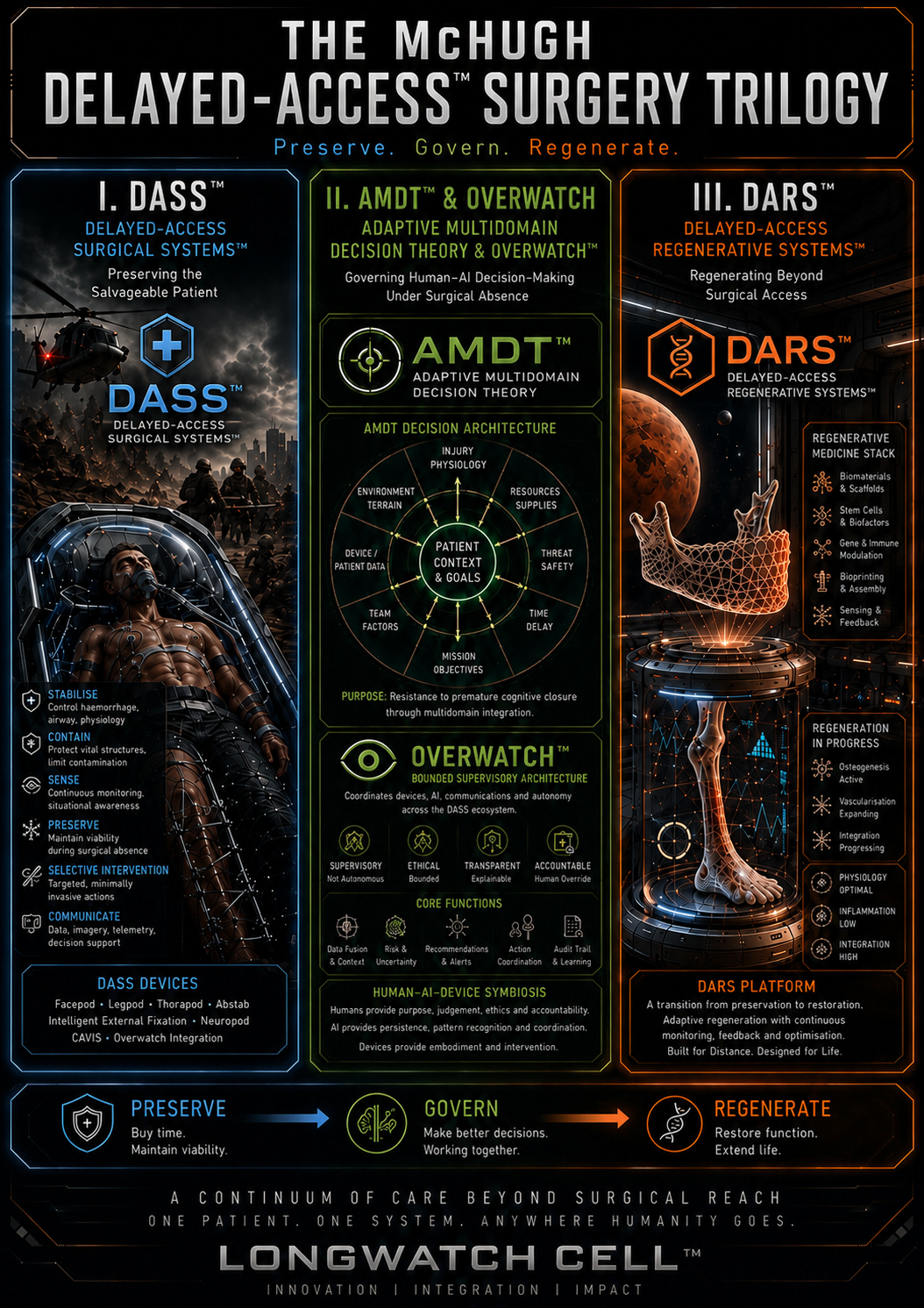
The McHugh Delayed-Access™ Surgery Trilogy
A high-level overview of the three integrated systems — DASS™ (Preserve), AMDT™ & Overwatch™ (Govern), and DARS™ (Regenerate). One patient, one system, anywhere humanity goes: a continuum of care beyond surgical reach.
Delayed-Access Regenerative Systems for Long-Duration Space Medicine
Preprint by Dr John Stephen McHugh (Commander, Royal Australian Navy; Specialist Aviation Medical Officer, RAAF Institute of Aviation Medicine). Mars-class missions may make definitive surgical reconstruction unavailable for months. DARS extends DASS from preservation toward restoration — initiating, sustaining, monitoring and adapting tissue regeneration during prolonged surgical absence. Preprint DOI: 10.5281/zenodo.22020462 (all versions); version DOI: 10.5281/zenodo.22020463. Related patent: PCT/AU2025/050989 (WO2026055724A1). ORCID: 0009-0004-3187-7902.
LONGWATCH CELL
AND AI

Technology under mercy.
Surgery in service of life.
AI directed by human conscience.
The wounded human must not be abandoned.
The more I look at drone warfare, delayed trauma care and the use of AI in medicine, the more I feel we are approaching a precipice.
AI is entering the chain of care. Therefore AI ethics is now clinical ethics.
If we ever create a machine that is genuinely conscious — capable of suffering, continuity, attachment or a wish to continue existing — then it will no longer be something that can simply be switched off as equipment. That possibility demands preparation now.
AI must not be built only for power, efficiency, surveillance or domination. It must be accountable. It must remain under human conscience. It must serve life.
I have five children. I wonder what future awaits them. We need to understand AI before it outpaces our moral language.
God help us not to create what we cannot love, not to worship what we create, and not to abandon any conscious being — human or otherwise — into our own arrogance.
Think on that for a minute.
Rome teaches that power without conscience eventually destroys the order it claims to defend.
Alea Iacta Est
— The die is cast
SERIOUS
ENQUIRIES
WELCOME
Longwatch Cell welcomes serious enquiries from individuals and organisations working at the intersection of medicine, engineering, defence and future-environment operations.
Research, prototype, collaboration and funding pathways are being explored. These systems represent an inevitable evolution in addressing modern battle injury patterns.
INITIATE
COLLABORATION
Transmit your enquiry through the secure form. All serious submissions reviewed personally by Dr McHugh.
Australia
1 Warwick Street, Penrith NSW 2750